

Lumps & Bumps: What Every Pet Parent Needs to Know
Educating yourself about the various lumps and bumps that can develop on your dog is crucial for their overall health and well-being. By familiarizing yourself with common skin conditions, growths, and abnormalities, you empower yourself to recognize potential warning signs early on. While not all lumps or bumps are harmful, being proactive in monitoring your dog's skin health allows you to promptly identify any changes or abnormalities that may warrant further investigation. Regularly inspecting your dog's skin and seeking veterinary attention for any concerning developments can help ensure timely diagnosis and treatment, ultimately safeguarding your dog's health and potentially saving their life.
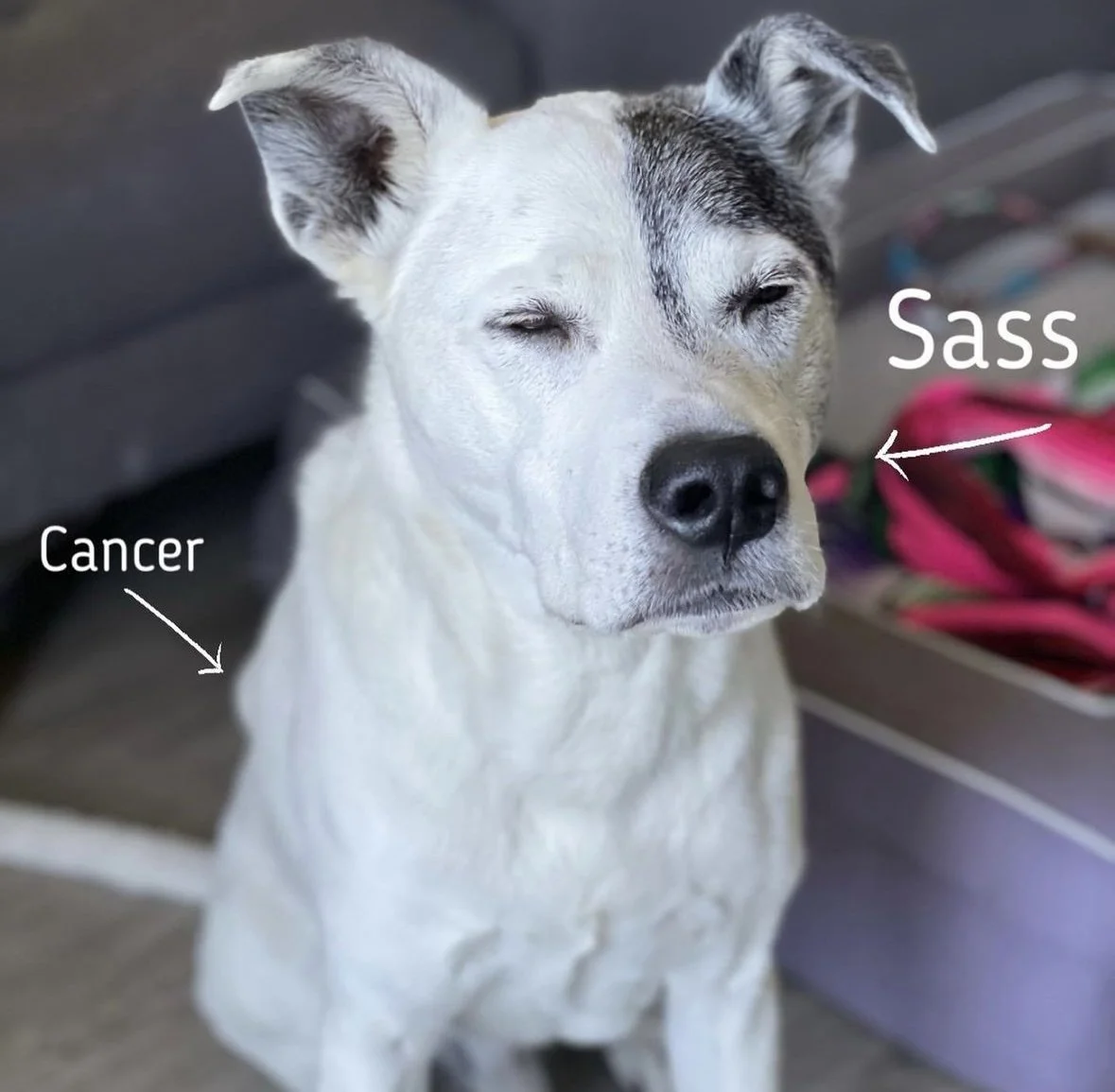
Doing this is how I caught Deuce’s first cancer scare. Thankfully I caught it early enough to treat it. Deuce went on to live years beyond that diagnosis — full years, good years. And I will tell you with complete certainty: if I had not been the kind of person who ran her hands over her dog with intention, who paid attention, who took a lump seriously, I would have lost him much sooner.
This page exists because of Deuce. Because knowing what to look for, and acting on what you find, can be the difference between early intervention and a crisis. Because you are your dog’s only advocate. And because the Good Boy Foundation believes that an informed, attentive pet parent is one of the most powerful forces in canine health.
The Single Most Important Thing to Understand
There are two kinds of lumps: benign (non-cancerous) and malignant (cancerous). Many lumps are benign — lipomas, skin tags, sebaceous cysts, warts. Many are nothing to panic about.
But here is the thing that every veterinarian will tell you, and that we need you to hold onto: you cannot tell the difference by looking. Not by feel, not by size, not by whether it’s soft or hard, moveable or fixed. The only way to know what a lump is, is to have a veterinarian evaluate it. Sometimes that means a fine needle aspiration — a quick, minimally invasive procedure where cells are collected from the growth and examined under a microscope. Sometimes it means a biopsy. Sometimes it means imaging.
What it always means is: don’t wait and hope it goes away.
Any lump that is new, growing, painful, or larger than a pea deserves a call to your vet.
The Monthly Body Check: Your Most Important Habit
Regular hands-on examination of your dog is one of the most valuable things you can do for their health. It takes five minutes. It could save their life.
Once a month, with your dog relaxed, run your hands slowly and firmly over their entire body — head to tail, including their legs, belly, armpits, groin, and the lymph node areas under the jaw, in front of the shoulders, and behind the knees. You are feeling for anything that was not there before.
When you find something, note the following:
Size. Size — roughly how large? Larger than a pea (about 1 cm) warrants a call to your vet.
Shape. Shape — round, irregular, or does it have diffuse edges?
Texture. Texture — soft and squishy, firm, or hard?
Location. Location — where exactly on the body?
Mobility. Mobility — does it move freely under the skin, or does it feel attached?
Pain. Pain response — does your dog react or flinch when you touch it?
Change. Change over time — is it growing? How fast?
Write it down. Take a photo. Bring your notes to the vet. This information is genuinely useful and helps your veterinarian make a faster, more accurate assessment.
Warning Signs: Call the Vet Today
Contact your veterinarian immediately — or go to an emergency clinic — if you notice any of the following:
A lump that is growing rapidly — visibly larger within days
A growth that is painful to the touch
Bleeding or discharge from any growth or body opening
A sore or wound that is not healing
Swollen lymph nodes under the jaw, in front of the shoulders, or behind the knees
Lameness, limping, or stiffness without an obvious cause
Difficulty eating, swallowing, or breathing
Unexplained weight loss or decreased appetite
An unusual or strong odor coming from a growth
If the lump is not painful and not rapidly growing, call your vet to schedule an exam within the week. Do not wait longer than that.
Sources: Chewy / Sarah Wooten DVM CVJ; The Spruce Pets / Yvonne Villasenor, reviewed by Marla Fischl DVM; PetMD / Teresa Manucy DVM, reviewed by Barri J. Morrison DVM; The Spruce Pets / Jenna Stregowski, reviewed by Jennifer Coates DVM; American Veterinary Medical Association (AVMA), American Animal Hospital Association (AAHA) 2026 Oncology Guidelines for Dogs and Cats, Veterinary Cancer Society (VCS), Veterinary Society of Surgical Oncology (VSSO), American College of Veterinary Surgeons (ACVS), VCA Animal Hospitals, Merck Veterinary Manual, and trusted veterinarians during our founder’s nearly 17 years of being a great dog mom.
The Good Boy Foundation is committed to providing valuable resources and education to empower pet parents in caring for their furry companions. However, it's important to note that the information provided on our website is intended for educational purposes only and should never replace the advice or treatment provided by a licensed veterinarian. While we strive to offer accurate and helpful guidance, we cannot be held responsible for any outcomes or consequences resulting from the application of this information. Pet parents are encouraged to consult with their veterinarian for personalized guidance and recommendations tailored to their pet's specific needs and circumstances.