

Common Benign Growths
Most lumps in dogs are benign. Here are the ones you are most likely to encounter. Even benign growths should be confirmed by a veterinarian — because the only way to know for certain is to have them evaluated.
Lipoma (Fatty Lump)
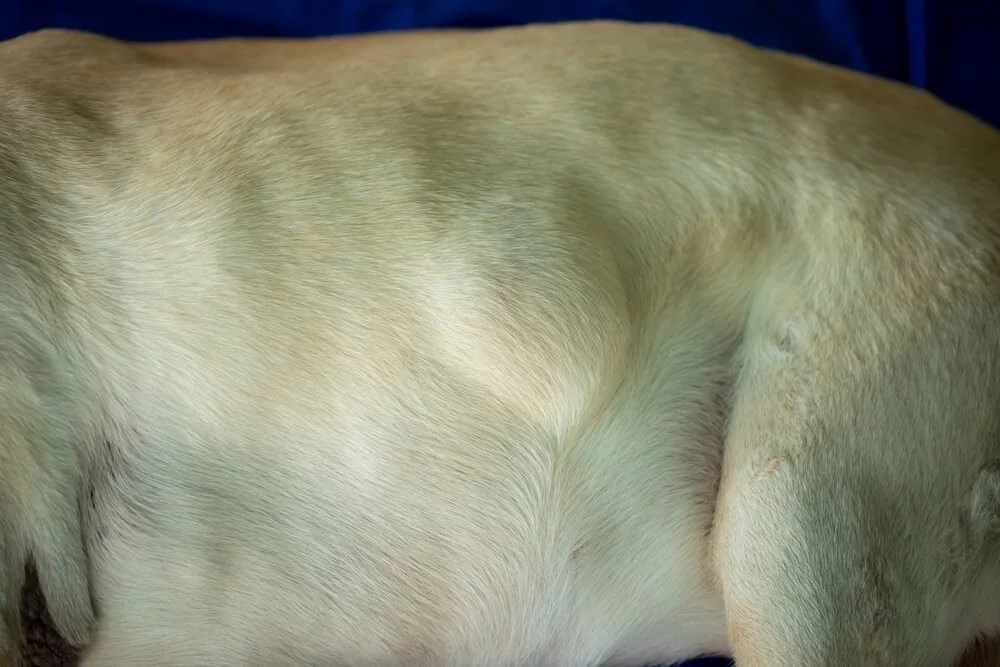
🔍 Quick ID: Soft, squishy, moves freely under the skin; usually on the trunk or legs of older dogs.
Lipomas are benign tumors made of fat cells. They sit just beneath the skin, feel round and moveable, and are most common in older or overweight dogs — particularly Labrador Retrievers, Miniature Schnauzers, and Dobermans. They are typically painless and may grow slowly over time.
Lipomas generally do not require treatment unless they grow large enough to interfere with movement or comfort. They should always be confirmed by a vet, because in rare cases, what appears to be a lipoma is actually a liposarcoma — a malignant tumor that requires very different treatment.
Sebaceous Cyst
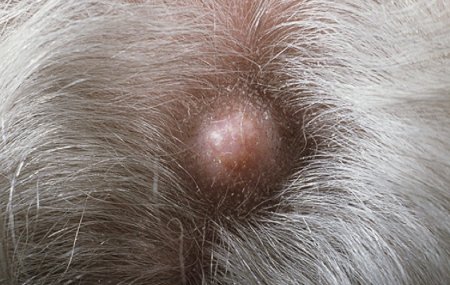
🔍 Quick ID: Firm, dome-shaped lump under the skin; may have a visible dark central pore; can release a thick, waxy material.
Sebaceous cysts form when an oil gland in the skin becomes blocked — essentially a very large, deep clogged pore. They are benign and may resolve on their own, or they may rupture and drain. If they become inflamed or infected, a vet visit and possible removal is warranted.
Do not attempt to drain or squeeze a sebaceous cyst at home. This can introduce infection and make the situation significantly worse.
Histiocytoma (Button Tumor)
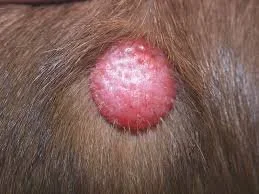
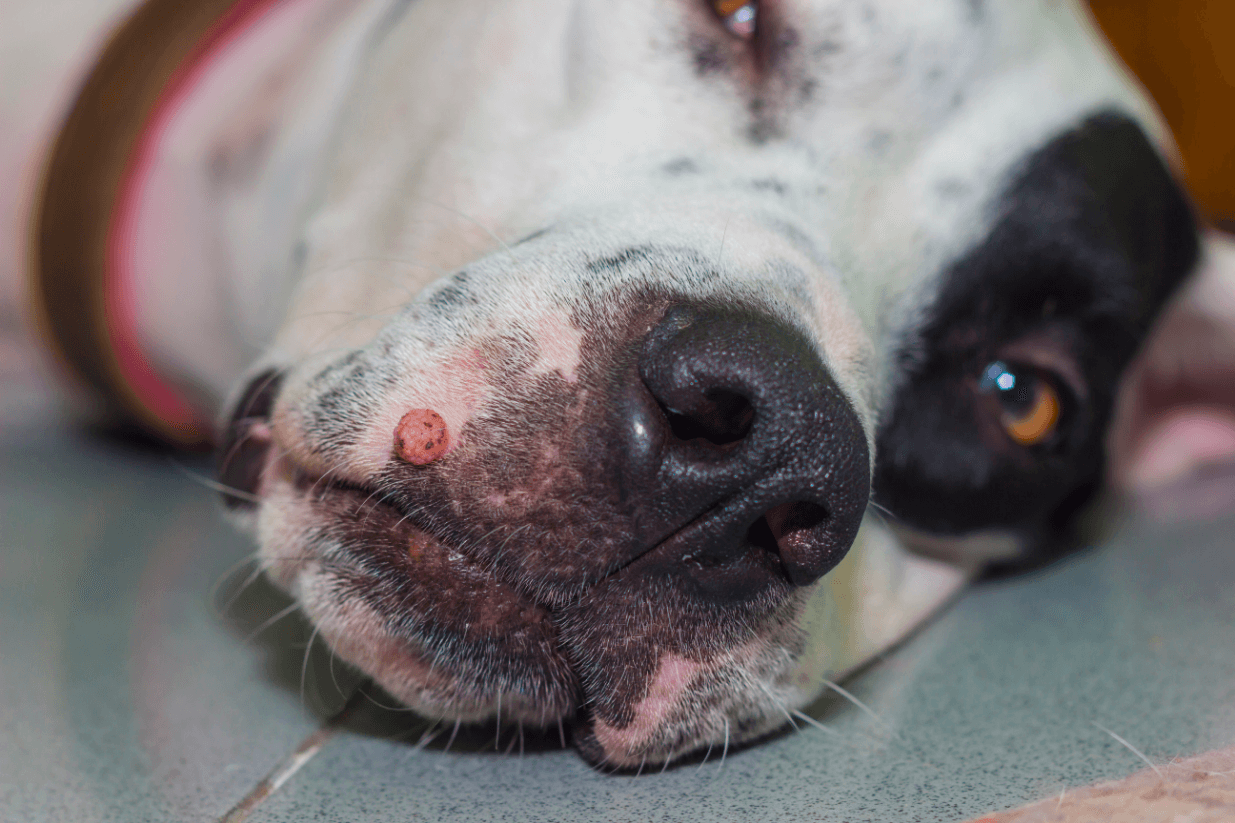
🔍 Quick ID: Bright red, smooth, hairless, raised bump — looks like a button; appears suddenly, often on the head, ears, or limbs of young dogs.
Histiocytomas are benign skin growths that arise from immune cells in the skin. They are most common in dogs under two years old, and certain breeds — including Boxers, Boston Terriers, and Greyhounds — are more predisposed. Despite their alarming appearance, they are non-cancerous and painless.
Many histiocytomas resolve on their own within a few weeks to a month. However, because they can look similar to more serious growths, they should always be seen by a vet. Large or irritated ones may be recommended for removal.
Skin Tag
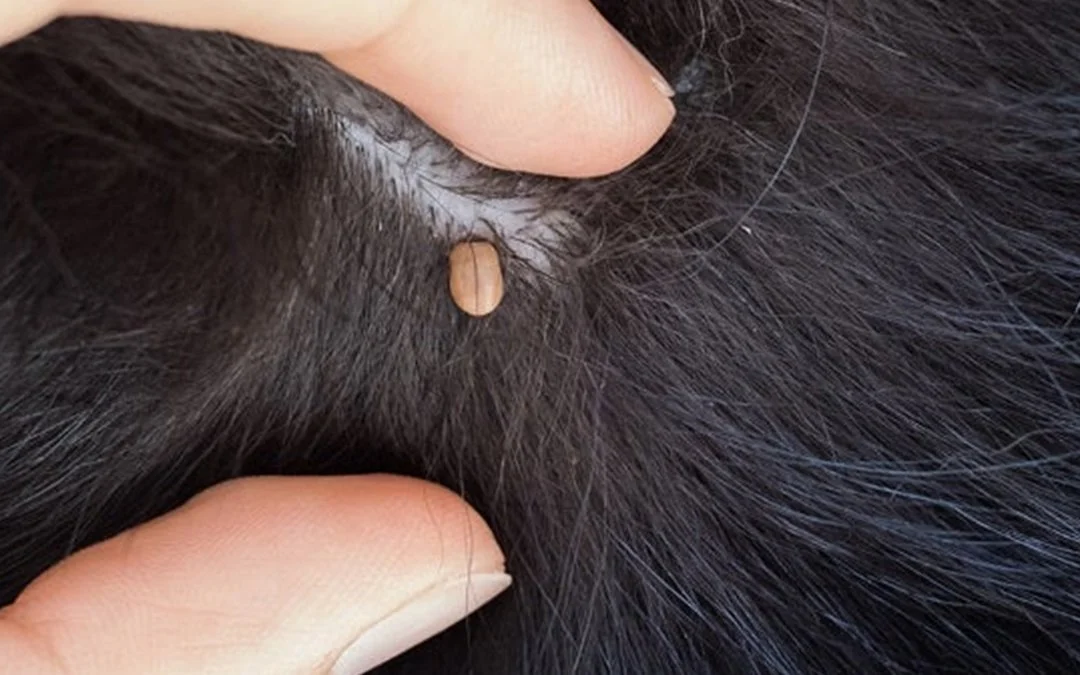
🔍 Quick ID: Small, fleshy growth hanging from a narrow stalk; same color as the surrounding skin.
Skin tags are benign overgrowths of connective tissue that form where skin rubs together. They are common in older dogs and large breeds. No treatment is needed unless they grow large, become irritated, or cause discomfort — in which case they can be surgically removed.
Papilloma (Wart)
🔍 Quick ID: Small, round, cauliflower-textured growth; often appears in or around the mouth in young dogs.
Papillomas are caused by a virus — the canine papillomavirus — and are contagious between dogs through direct contact or shared items like toys and bowls. They appear most often in young dogs whose immune systems are still developing, and most resolve on their own within a few months as immunity matures.
Severe cases that make eating or swallowing difficult may require treatment or surgical removal. If you notice a growth in your dog’s mouth or notice them pawing at their face or having trouble eating, see a vet.
Follicular Cyst
🔍 Quick ID: Smooth lump growing from a hair follicle; may release thick white, yellow, or brownish material when pressed.
Follicular cysts grow up from hair follicles and can appear anywhere on the body. They are benign, but can become infected and may require antibiotic treatment. If they are growing, becoming painful, or repeatedly becoming infected, surgical removal is recommended. They do not typically regrow after removal.
Sebaceous Gland Tumor
🔍 Quick ID: Small, often dark, wart-like growth; commonly appears on the head or eyelids of older large-breed dogs.
Sebaceous gland tumors are benign growths that develop from the oil-producing glands in the skin. They are typically smaller than a pea and may bleed or develop a crust. No treatment is required unless they are bothersome, growing, or becoming infected.
Meibomian Gland Tumor
🔍 Quick ID: Slow-growing lump at the edge of the eyelid; may look like a small cyst or cause extra tearing.
The meibomian glands line the edges of the eyelids and produce the oily layer of the tear film. When they become clogged, a cyst or tumor can form. These are generally benign, but can become inflamed, painful, or ulcerated. If they are large enough to affect blinking or cause eye irritation, removal is recommended. They can be surgically removed or frozen off and rarely regrow.
Warning Signs: Call the Vet Today
Contact your veterinarian immediately — or go to an emergency clinic — if you notice any of the following:
A lump that is growing rapidly — visibly larger within days
A growth that is painful to the touch
Bleeding or discharge from any growth or body opening
A sore or wound that is not healing
Swollen lymph nodes under the jaw, in front of the shoulders, or behind the knees
Lameness, limping, or stiffness without an obvious cause
Difficulty eating, swallowing, or breathing
Unexplained weight loss or decreased appetite
An unusual or strong odor coming from a growth
If the lump is not painful and not rapidly growing, call your vet to schedule an exam within the week. Do not wait longer than that.
Sources: Chewy / Sarah Wooten DVM CVJ; The Spruce Pets / Yvonne Villasenor, reviewed by Marla Fischl DVM; PetMD / Teresa Manucy DVM, reviewed by Barri J. Morrison DVM; The Spruce Pets / Jenna Stregowski, reviewed by Jennifer Coates DVM; American Veterinary Medical Association (AVMA), American Animal Hospital Association (AAHA) 2026 Oncology Guidelines for Dogs and Cats, Veterinary Cancer Society (VCS), Veterinary Society of Surgical Oncology (VSSO), American College of Veterinary Surgeons (ACVS), VCA Animal Hospitals, Merck Veterinary Manual, and trusted veterinarians during our founder’s nearly 17 years of being a great dog mom.
The Good Boy Foundation is committed to providing valuable resources and education to empower pet parents in caring for their furry companions. However, it's important to note that the information provided on our website is intended for educational purposes only and should never replace the advice or treatment provided by a licensed veterinarian. While we strive to offer accurate and helpful guidance, we cannot be held responsible for any outcomes or consequences resulting from the application of this information. Pet parents are encouraged to consult with their veterinarian for personalized guidance and recommendations tailored to their pet's specific needs and circumstances.