

Common Malignant Growths
These are less common than benign growths — but they are the reason we take every lump seriously. Early detection dramatically improves outcomes for every one of the cancers below.
Lymphoma
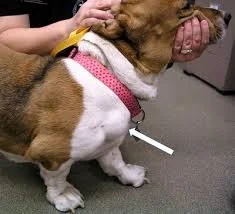
🔍 Quick ID: Firm, rubbery, painless swelling in lymph node areas — under the jaw, in front of the shoulders, or at the back of the rear legs.
Lymphoma is a cancer of the lymphatic system and one of the most common cancers in dogs overall. The first sign is often swollen lymph nodes — the areas most easily felt under the jaw, in front of the shoulders, and behind the knees. The swelling may feel like a firm, round mass just beneath the skin.
Lymphoma is not treated with surgery — it is treated with chemotherapy. This is precisely why the monthly body check matters: a pet parent who knows what a lymph node feels like normally is the person most likely to notice when something has changed.
Mast Cell Tumor
🔍 Quick ID: Highly variable in appearance — can look like almost anything; may swell, redden, or become irritated suddenly when touched or disturbed.
Mast cell tumors are one of the most common malignant skin tumors in dogs. They can appear anywhere on the body, at any age, and in almost any form — which is exactly what makes them dangerous to dismiss. They are graded I through III based on how aggressive they are, with Grade III being the most malignant and most likely to spread.
When a mast cell tumor is disturbed — even by pressing on it — it can release histamine, causing sudden, dramatic swelling, redness, and in severe cases, a systemic reaction. If a growth suddenly swells or becomes red and irritated after being touched, contact your vet immediately.
Mammary Tumor
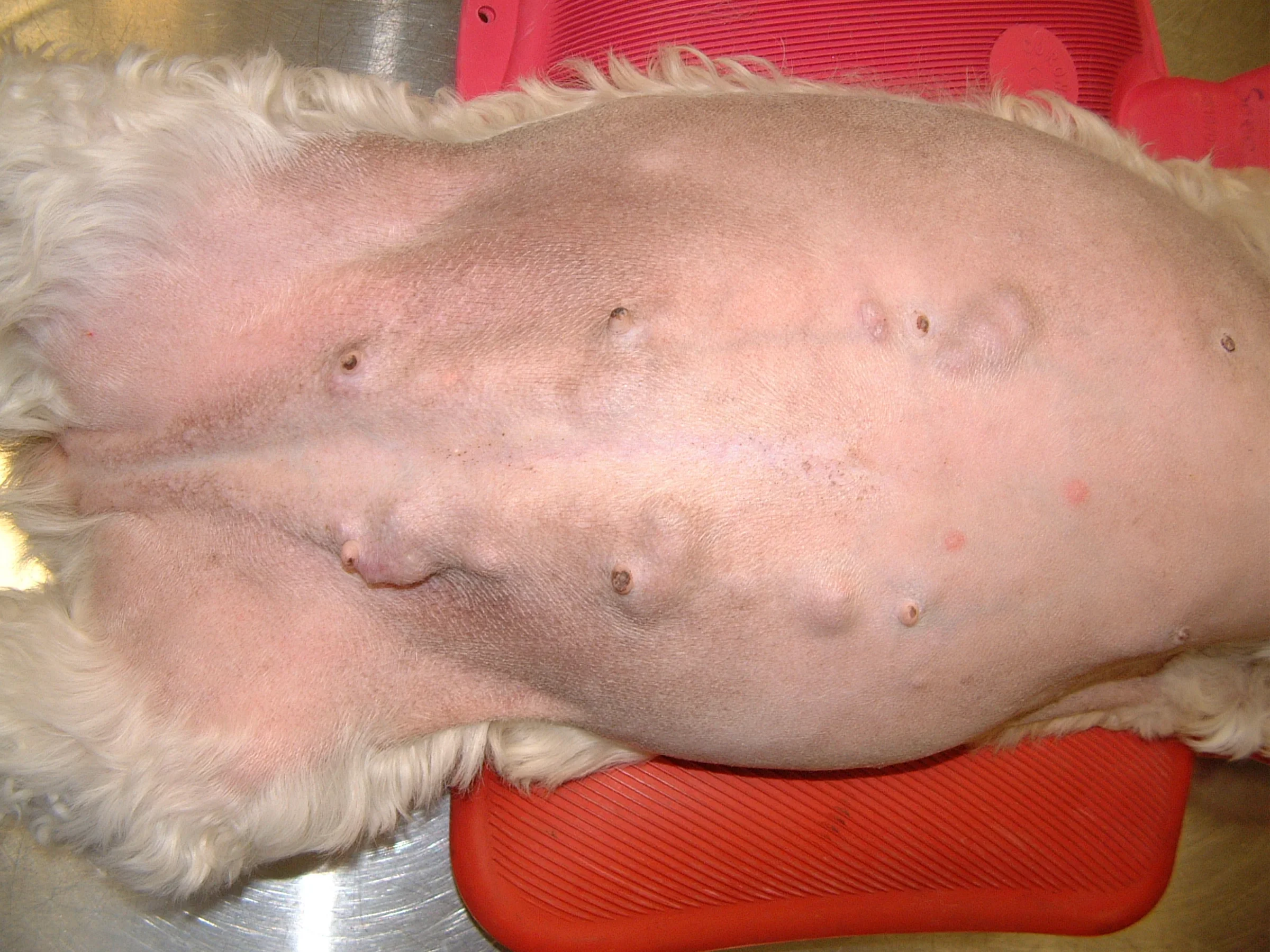
🔍 Quick ID: Firm lump or mass along the mammary glands on the underside of female dogs, particularly near the hind legs.
Mammary tumors are among the most common cancers in female dogs, particularly those who are unspayed or were spayed after their first heat cycle. Roughly half of all mammary tumors in dogs are malignant. Prognosis improves significantly when tumors are found and removed while they are still small — which is why regular, thorough physical checks of your female dog’s underside are so important.
Spaying before the first heat cycle dramatically reduces the risk of mammary tumors later in life.
Squamous Cell Carcinoma
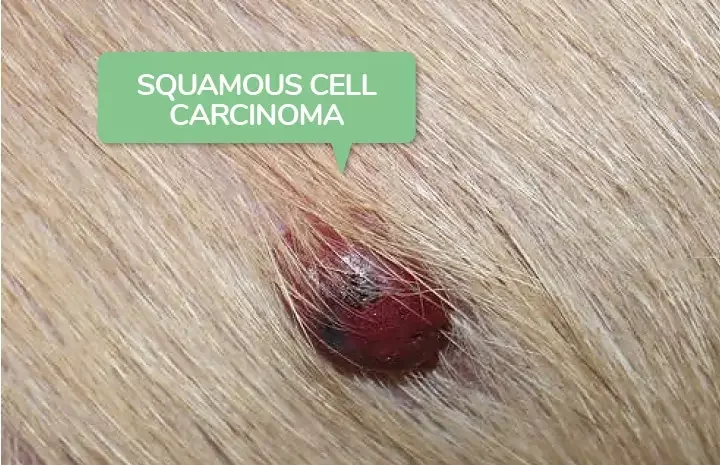
🔍 Quick ID: Pink, reddish, raw-looking patch or raised growth; often in sun-exposed areas like the nose, ears, or belly.
Squamous cell carcinoma is a skin cancer associated with sun exposure and is more common in dogs with pale or thin-coated skin on vulnerable areas. It can also develop in the mouth, where it may be associated with bad breath, difficulty chewing, or a visible oral mass. When it occurs on the skin, it often appears as a raised, irregular, raw-looking growth that does not heal.
Oral squamous cell carcinoma can be aggressive and spread quickly, making early detection especially important.
Malignant Melanoma
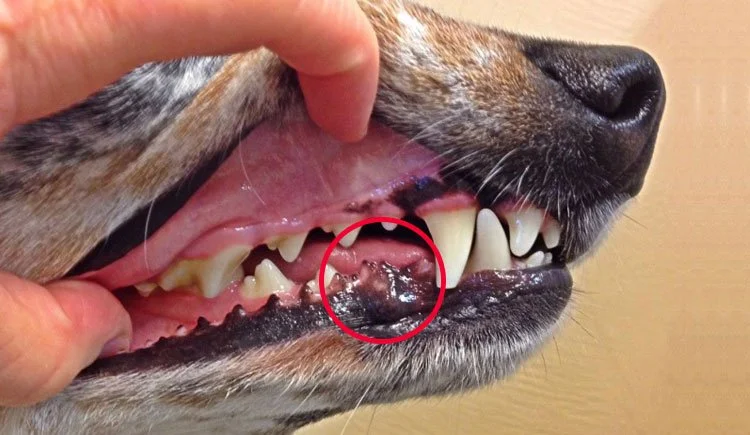
🔍 Quick ID: Dark or black growth on the skin or inside the mouth; can also be pink or unpigmented — color alone is not a reliable indicator.
Melanoma can occur on the skin or in the mouth. While many melanomas are dark or black, not all are, which is what makes them easy to miss. Oral melanoma, in particular, can be aggressive and spread rapidly. Signs of an oral growth include bad breath, difficulty chewing, visible swelling, or pawing at the mouth.
Any unusual growth in or around your dog’s mouth warrants an immediate vet visit.
Internal Tumors
🔍 Quick ID: Not visible or palpable from the outside; detected through symptoms — difficulty breathing, vomiting, unexplained weight loss, lethargy — or found during routine imaging.
Not all tumors can be felt from the outside. Internal masses in the chest or abdomen may first present as vague, systemic symptoms: lethargy, decreased appetite, difficulty breathing, vomiting, or unexplained weight loss. Mammary tumors, lymphoma, and some other cancers can also have internal components that are not visible during a standard body check.
Routine annual wellness exams with your veterinarian — which often include blood work and sometimes imaging — are one of the best tools for catching internal issues before they become crises.
Warning Signs: Call the Vet Today
Contact your veterinarian immediately — or go to an emergency clinic — if you notice any of the following:
A lump that is growing rapidly — visibly larger within days
A growth that is painful to the touch
Bleeding or discharge from any growth or body opening
A sore or wound that is not healing
Swollen lymph nodes under the jaw, in front of the shoulders, or behind the knees
Lameness, limping, or stiffness without an obvious cause
Difficulty eating, swallowing, or breathing
Unexplained weight loss or decreased appetite
An unusual or strong odor coming from a growth
If the lump is not painful and not rapidly growing, call your vet to schedule an exam within the week. Do not wait longer than that.
Sources: Chewy / Sarah Wooten DVM CVJ; The Spruce Pets / Yvonne Villasenor, reviewed by Marla Fischl DVM; PetMD / Teresa Manucy DVM, reviewed by Barri J. Morrison DVM; The Spruce Pets / Jenna Stregowski, reviewed by Jennifer Coates DVM; American Veterinary Medical Association (AVMA), American Animal Hospital Association (AAHA) 2026 Oncology Guidelines for Dogs and Cats, Veterinary Cancer Society (VCS), Veterinary Society of Surgical Oncology (VSSO), American College of Veterinary Surgeons (ACVS), VCA Animal Hospitals, Merck Veterinary Manual, and trusted veterinarians during our founder’s nearly 17 years of being a great dog mom.
The Good Boy Foundation is committed to providing valuable resources and education to empower pet parents in caring for their furry companions. However, it's important to note that the information provided on our website is intended for educational purposes only and should never replace the advice or treatment provided by a licensed veterinarian. While we strive to offer accurate and helpful guidance, we cannot be held responsible for any outcomes or consequences resulting from the application of this information. Pet parents are encouraged to consult with their veterinarian for personalized guidance and recommendations tailored to their pet's specific needs and circumstances.