

Vaccines & Parasite Prevention
Vaccines and parasite prevention are two of the simplest, most effective things you can do to protect your dog's health — and your family's. Vaccines shield your dog from serious and sometimes fatal diseases like parvovirus, distemper, and rabies. Parasite prevention keeps heartworm, fleas, ticks, and intestinal worms from quietly doing damage before you ever know there's a problem. The right schedule and products will depend on your dog's age, where you live, and their lifestyle, so this section is designed to give you a solid foundation before your next vet conversation.
Part 1: Vaccines
Why Vaccines Matter
Vaccines work by training your dog's immune system to recognize and fight specific viruses or bacteria — before your dog is ever exposed to the real thing. When enough dogs in a community are vaccinated, it creates "herd immunity" that protects even the most vulnerable animals who can't be vaccinated.
The diseases vaccines prevent aren't rare historical problems. Parvovirus, distemper, and leptospirosis are still circulating and still killing dogs today. Rabies remains a public health crisis in wildlife. Vaccination is the single most cost-effective health investment you will make for your dog.
Core vs. Lifestyle Vaccines
All vaccines fall into one of two categories:
Core vaccines are recommended for every dog, regardless of lifestyle, where they live, or how often they interact with other dogs. The diseases they prevent are either so severe, so widespread, or so dangerous to humans that vaccination is considered non-negotiable.
Lifestyle vaccines are recommended based on your dog's individual risk — where you live, where they go, and what they do. Your vet will help you decide which of these apply.
The Puppy Vaccine Schedule
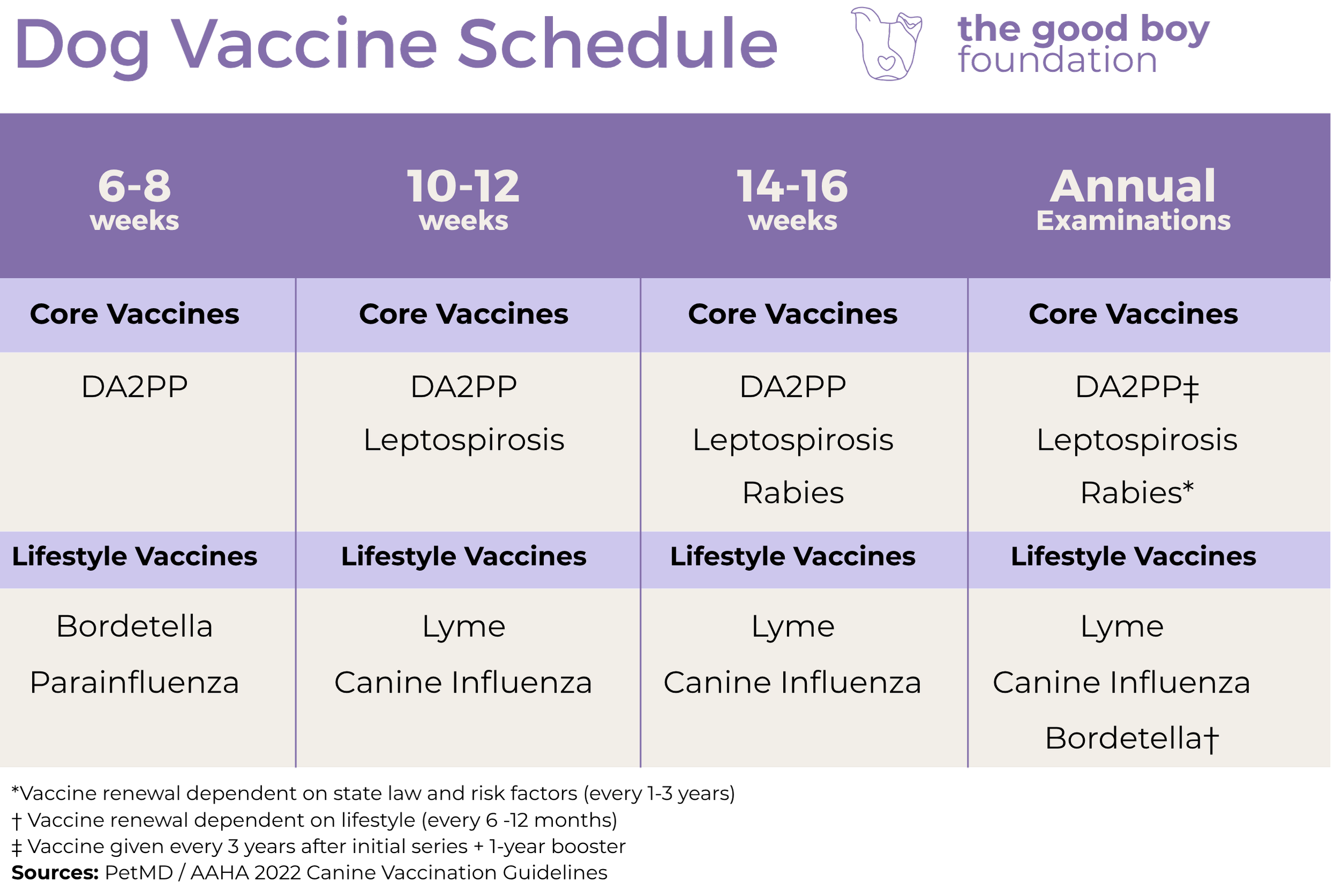
Puppies are born with some immune protection passed from their mother's milk (called maternal antibodies), but this protection fades — and the timing varies from puppy to puppy. This is why the puppy series is given in multiple doses spaced a few weeks apart: it ensures that by the time maternal immunity wanes, your puppy's own immune system has been fully activated.
The series begins at 6–8 weeks and continues until at least 16 weeks of age. Missing doses or stopping early leaves dangerous gaps.
Core Vaccines — What Each One Does
DA2PP — The "Core Combo" (Distemper, Adenovirus, Parvovirus, Parainfluenza)
This combination vaccine is sometimes called the "5-way" or "DHPP" vaccine. It protects against four separate diseases in a single shot. It's the most important vaccine your dog will ever receive.
Canine Distemper
Distemper is caused by a virus closely related to measles. It attacks the respiratory, gastrointestinal, and neurological systems simultaneously — and there is no cure. Once a dog develops neurological signs, the disease is almost always fatal or leads to permanent brain damage.
Signs: Starts with fever, runny nose, and eye discharge — then progresses to vomiting, diarrhea, seizures, and muscle twitching. Neurological symptoms (seizures, loss of coordination, "chewing gum" jaw movements) can develop weeks or months after the initial illness.
Mortality rate: Up to 50% in adult dogs, up to 80% in puppies.
How it spreads: Airborne exposure from infected dogs or wildlife (raccoons, foxes, skunks are common carriers).
Vaccine protection: Highly effective. The disease essentially disappeared from the vaccinated dog population and only resurfaces in unvaccinated communities.
Canine Parvovirus
Parvo is one of the most feared diseases in dogs — and for good reason. It attacks the rapidly dividing cells of the intestinal lining and the bone marrow, destroying the gut's ability to absorb nutrients and gutting the immune system at the same time. Puppies between 6 weeks and 6 months are the most vulnerable.
Signs: Severe, often bloody diarrhea; uncontrollable vomiting; extreme lethargy; loss of appetite; fever. Dehydration sets in rapidly. Dogs can go from sick to critical in 24–48 hours.
Survival rate without treatment: Less than 10%. With aggressive hospitalization (IV fluids, supportive care): 70–90%.
How it spreads:Through contact with infected feces. The virus is extraordinarily hardy — it survives on surfaces, in soil, and in the environment for months to years, and is resistant to most household disinfectants. An infected dog doesn't even need to be present — their paw prints on a sidewalk can transmit the virus.
Vaccine protection:Highly effective. Do not take unvaccinated puppies to dog parks, pet stores, or areas where unknown dogs have been.
Adenovirus (Infectious Canine Hepatitis)
Caused by Canine Adenovirus Type 1, this disease attacks the liver and can cause acute liver failure in severe cases. The Type 2 adenovirus (which the vaccine actually contains) provides cross-protection against Type 1 while also contributing to kennel cough protection.
Signs:Fever, lethargy, vomiting, abdominal pain, jaundice (yellowing of eyes/skin), sometimes a characteristic "blue eye" (corneal cloudiness).
Vaccine protection: Highly effective; included in the standard DA2PP combination.
Parainfluenza
A virus that contributes to kennel cough (infectious tracheobronchitis). Usually causes mild upper respiratory illness on its own, but combines with other pathogens to produce more serious infections.
Signs:Cough, runny nose, mild lethargy.
Vaccine protection:Included in the DA2PP combo. Also available as a standalone intranasal vaccine alongside Bordetella.
Rabies
Rabies vaccination is required by law in all 50 U.S. states — and for good reason. Rabies is 100% fatal in unvaccinated animals and humans once symptoms appear. There is no treatment. It is transmitted through the bite of an infected animal.
Signs in dogs:Behavior change is often the first sign — a friendly dog becoming aggressive, or a normally active dog becoming withdrawn. This is followed by hypersalivation (the "foaming at the mouth" symptom), paralysis, and death. By the time symptoms appear, the outcome is inevitable.
Wildlife reservoir:Bats, raccoons, foxes, and skunks are the primary carriers in the U.S. Any contact between your dog and wildlife is a potential exposure.
Schedule:First dose at 14–16 weeks of age. Booster at 1 year. Then either annually or every 3 years depending on your state's laws and the specific vaccine used. Your vet will know your state's requirements.
If your dog is bitten by a potentially rabid animal: Contact your vet and local animal control immediately. Even vaccinated dogs may need a booster and observation period per state protocol.
Leptospirosis
As of 2022, AAHA recommends leptospirosis vaccination for most dogs — it is effectively a core vaccine for the majority of pets.
Leptospirosis is a bacterial infection spread through the urine of infected wildlife — primarily raccoons, skunks, opossums, squirrels, and rats. The bacteria survive in standing water, puddles, soil, and mud. Urban and suburban dogs are at just as much risk as rural dogs — rats are everywhere, and puddles are everywhere.
High-risk situations include drinking from puddles or natural water sources, roaming in rural or wooded areas, exposure to wildlife, living in flood-prone areas, or visiting dog parks.Leptospirosis can infect humans. It's one of the most common zoonotic diseases in the world.
Signs: Fever, lethargy, loss of appetite, vomiting, muscle pain, and in severe cases, acute kidney or liver failure, bleeding disorders, and death.
Schedule:Two initial doses 2–4 weeks apart, then annual boosters.
Lifestyle Vaccines — Do They Apply to Your Dog?
Bordetella (Kennel Cough)
Bordetella bronchiseptica is the primary bacterial cause of kennel cough — the umbrella term for canine infectious tracheobronchitis. But kennel cough is rarely caused by Bordetella alone; it's usually a combination of Bordetella, parainfluenza virus, and other organisms working together.
Signs of kennel cough:
A persistent, forceful, honking cough — often described as something stuck in the throat
Runny nose
Mild lethargy and reduced appetite
Sneezing
In most healthy adult dogs, kennel cough is uncomfortable but self-limiting (like a human cold). In puppies, senior dogs, or immunocompromised dogs, it can progress to pneumonia.
How it spreads: Incredibly contagious. One infected dog coughing, sneezing, or barking in a shared space releases thousands of infectious particles. Common sites of exposure: boarding facilities, shelters, doggy daycare, training classes, dog parks, groomers.
Who needs it: Any dog that regularly interacts with other dogs. Many boarding, daycare, and grooming facilities require it.
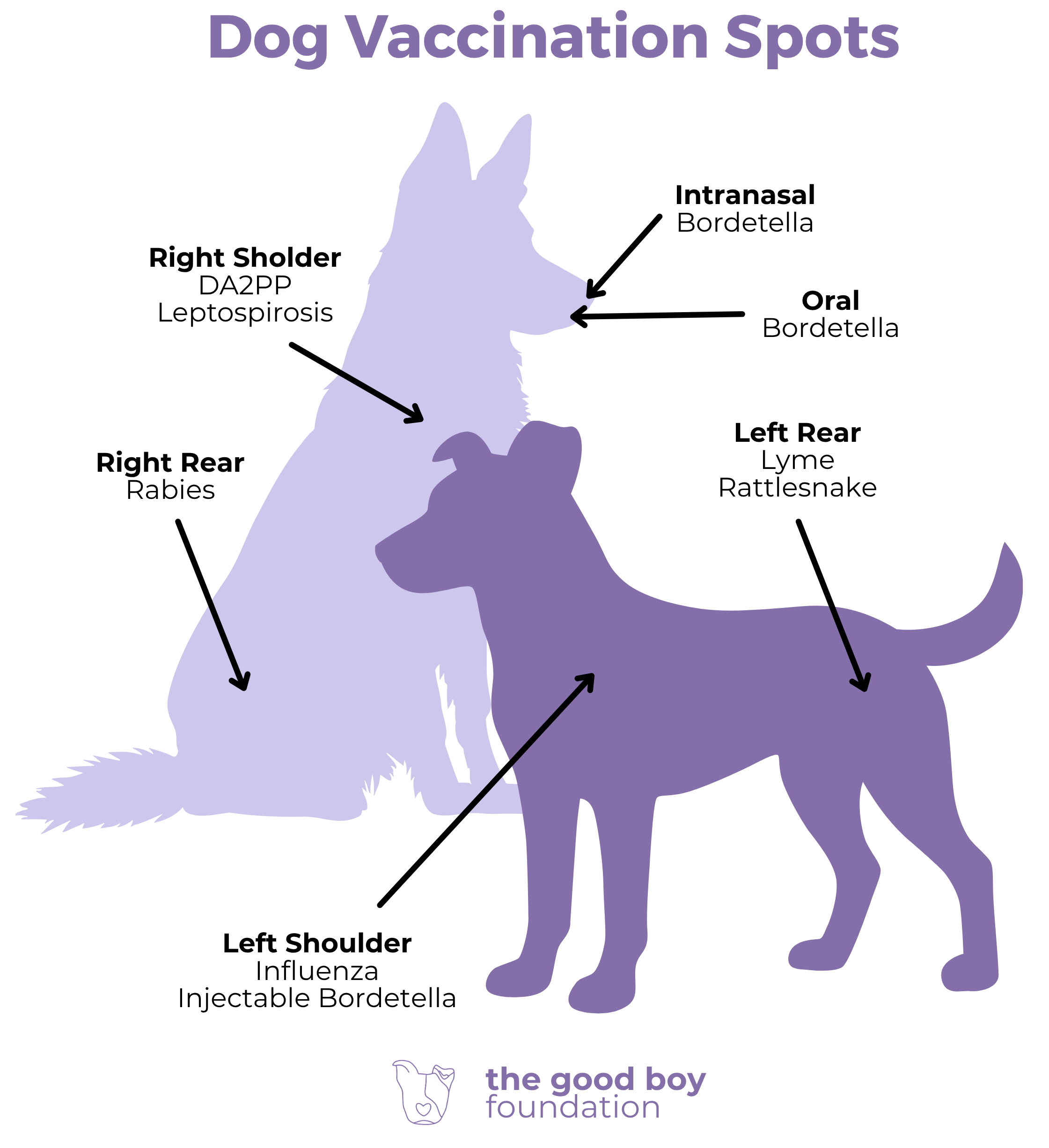
Forms: Injectable, oral, or intranasal. The intranasal and oral forms often provide faster protection (within days) and stronger local immunity in the airway. Ask your vet which is best for your dog's situation.
Schedule: Initial vaccine (some forms require two doses). Annual or semi-annual boosters depending on your dog's level of exposure.
Lyme Disease
Lyme disease is transmitted by the bite of infected black-legged ticks (deer ticks). It's caused by a bacteria called Borrelia burgdorferi and is increasingly widespread — no longer just a Northeast problem.
Signs: "Shifting-leg lameness" — a dog that limps on one leg, then switches to another — is the hallmark sign. Also fever, lethargy, swollen lymph nodes, and loss of appetite. In severe untreated cases: kidney damage (Lyme nephritis), which can be fatal.
Who needs it: Dogs in or traveling to areas with established tick populations — the Northeast, Mid-Atlantic, Upper Midwest, and Pacific Coast. But tick ranges are expanding every year. If your dog spends any time outdoors in wooded, grassy, or brushy areas, the Lyme vaccine is worth discussing.
Important: Vaccination does not replace tick prevention. Use both. The vaccine takes about 4 weeks after the second dose to reach full protection.
Schedule: Two initial doses 2–4 weeks apart, then annual boosters. Best given before tick season begins.
Canine Influenza (Dog Flu)
Canine influenza is caused by two strains — H3N8 and H3N2. Unlike the seasonal flu in humans, dogs have no natural immunity to canine influenza, so virtually any exposed dog can become infected.
Signs: Persistent cough, runny nose, fever, lethargy, reduced appetite. Most dogs recover fully in 2–3 weeks. A small percentage develop severe pneumonia.
Who needs it: Dogs that frequently visit boarding facilities, doggy daycare, dog parks, or dog shows. Outbreaks tend to be facility-based — once one dog brings it in, it spreads rapidly through an unvaccinated population.
Note: Your vet may check whether canine influenza is actively circulating in your area before recommending the vaccine. It's not universally recommended the way Bordetella is.
Schedule: Two initial doses 2–4 weeks apart, then annual boosters. The bivalent vaccine covers both H3N8 and H3N2 strains.
Vaccine Safety — What to Know
Vaccines are among the most rigorously tested products in veterinary medicine. Serious reactions are rare. Most dogs experience nothing more than mild soreness at the injection site and temporary tiredness — and these resolve within 24–48 hours.
Normal post-vaccine reactions:
Mild swelling or tenderness where the shot was given
Low energy and reduced appetite for a day
Mild fever
Reactions to call your vet about:
Facial swelling, hives, or itching that begins within 30–60 minutes (signs of an allergic reaction)
Vomiting or diarrhea after a vaccine appointment
A firm lump at the injection site that persists more than 3 weeks
Breathing difficulty (rare — go immediately)
If your dog has had a previous reaction to a vaccine, always tell your vet before any future vaccines. They can pre-medicate, use a different formulation, or split up vaccines across visits.
Vaccines cannot give your dog the disease they protect against. Modified live vaccines contain weakened virus that cannot cause full disease in a healthy immune system. The only exception is the intranasal Bordetella/parainfluenza vaccine, which can rarely cause mild, brief cold-like symptoms — this is expected and not a concern.
Part 2: Intestinal Parasites
Why This Matters More Than You Think
Intestinal parasites are far more common than most pet parents realize. The Companion Animal Parasite Council (CAPC) estimates that millions of dogs in the U.S. are infected with intestinal parasites at any given time — and the majority show no symptoms at all. This means your dog can be shedding parasites into the environment — your yard, your local park, your home — without any visible sign of illness.
Several of these parasites are zoonotic — meaning they can infect humans, including children. This makes prevention a family health issue, not just a pet health issue.
Roundworms
Roundworms are the most common intestinal parasite in dogs worldwide. They look exactly as you'd imagine — long, spaghetti-like white worms, up to 7 inches long.
How dogs get them:
Puppies most commonly get roundworms from their mother — larvae pass through the placenta before birth or through the mother's milk during nursing
Older dogs get them by swallowing eggs from contaminated soil, water, or feces, or by eating an infected rodent or bird
Signs: Many adult dogs show no signs at all. Heavy infections — most common in puppies — cause a pot-bellied appearance, poor coat, failure to thrive, vomiting (sometimes with visible worms), and diarrhea. In severe puppy infections, roundworms can cause intestinal blockage and death.
Zoonotic risk: High. Toxocara eggs in soil can infect humans — particularly children who play in contaminated dirt or sandboxes. In humans, larvae can migrate to the eyes (ocular larva migrans, potentially causing blindness) or other organs (visceral larva migrans). Handwashing after outdoor play and picking up pet waste promptly are critical.
Treatment: Pyrantel pamoate, fenbendazole, or milbemycin — typically multiple doses. Most monthly heartworm preventives that contain pyrantel or milbemycin also control roundworms, providing ongoing prevention.
Testing: Fecal exam. Note that because eggs are shed intermittently, a single negative fecal doesn't rule out infection.
Hookworms
Hookworms are small — only about half an inch long — but they are one of the most dangerous parasites for puppies. They attach to the intestinal lining and actively feed on blood. A heavy hookworm infection in a young puppy can cause life-threatening anemia.
How dogs get them:
Skin penetration — larvae burrow directly through a dog's paws or belly from contaminated soil
Ingestion of contaminated soil or feces
From mother to puppy through the placenta or milk
Signs:
Pale gums (from blood loss)
Weakness, lethargy
Dark, tarry, or bloody diarrhea
Weight loss and poor growth in puppies
Puppies can become critically ill and die without treatment
Zoonotic risk: Moderate. Hookworm larvae can penetrate human skin — typically the feet — causing a condition called cutaneous larva migrans: an intensely itchy, winding red rash that tracks the path of the migrating larva. Walking barefoot in areas where dogs defecate is the primary risk.
Treatment: Pyrantel pamoate, fenbendazole, or moxidectin. Most monthly heartworm preventives with pyrantel or milbemycin also control hookworms.
Whipworms
Whipworms live in the large intestine and cecum and are one of the harder parasites to clear due to the long lifespan of their eggs in the environment.
How dogs get them: Swallowing whipworm eggs from contaminated soil. The eggs can survive in soil for years — re-infection is common in yards where an infected dog has defecated.
Signs:
Chronic, watery diarrhea — often with blood or mucus
Weight loss
Lethargy
Many dogs show no signs with light infections
Zoonotic risk: Low. Trichuris vulpis does not infect humans.
Treatment: Fenbendazole (given for 3–5 days, often repeated in 3 weeks and again in 3 months to break the life cycle), milbemycin oxime, or febantel. Environmental decontamination and prompt waste removal are critical — eggs survive a long time in soil.
Tapeworms
Tapeworms are flat, segmented worms that can grow several feet long, though individual segments (called proglottids) are what dog owners typically notice. They look like small grains of white rice — you'll find them near your dog's rear end, in their feces, or on their bedding.
How dogs get them:
The most common tapeworm is transmitted by ingesting an infected flea during grooming. If your dog has tapeworms, they almost certainly have or recently had fleas.
Less common tapeworms (Taenia species) are transmitted by eating infected prey animals — rodents, rabbits.
Signs: Tapeworms rarely cause serious illness in adult dogs. The main signs are:
Visible rice-like segments on the fur around the tail, in feces, or on bedding
Scooting (dragging bottom on the ground) from irritation
Occasional vomiting or weight loss in heavy infections
Zoonotic risk: Low for common tapeworms. Humans would have to swallow an infected flea to get Dipylidium (which happens rarely, most often in small children). However, Echinococcus tapeworms — a less common species found primarily in dogs that eat raw prey — pose a serious public health concern and can cause life-threatening cysts in human organs.
Treatment: Praziquantel — highly effective and typically works after a single dose. Flea control is essential alongside treatment, or re-infection will occur.
Giardia
Giardia is not a worm — it's a microscopic, single-celled parasite (a protozoan) that infects the small intestine. It's one of the most common intestinal parasites in dogs in the United States.
How dogs get it: Swallowing Giardia cysts from contaminated water (lakes, streams, puddles), soil, or feces. Dogs that drink from natural water sources, go to dog parks, or live in group settings (shelters, breeders) are at higher risk.
Signs:
Soft, greasy, foul-smelling diarrhea — often sudden in onset
Intermittent diarrhea that seems to come and go
Mucus in stool
Weight loss with prolonged infection
Many infected dogs, especially healthy adults, show no signs
Giardia can be particularly persistent and difficult to clear completely, especially in households with multiple pets.
Zoonotic risk: Debated. The strains of Giardia that affect dogs are generally different from those that affect humans, and the CDC considers the risk of transmission from dog to human to be low — but not zero. Good hygiene (handwashing, prompt waste removal) is recommended.
Treatment: Fenbendazole (5 days) and/or metronidazole. Sometimes both are used together for resistant cases. Environmental decontamination matters — bathe your dog to remove cysts from the coat, disinfect water bowls and bedding with dilute bleach, and pick up all feces immediately.
Coccidia
Like Giardia, coccidia is a microscopic protozoan — not a worm. It's found in soil contaminated with infected feces and is especially common and dangerous in puppies and young dogs.
How dogs get it: Swallowing oocysts (eggs) from contaminated soil or feces. Puppies are commonly infected by their mother or the environment of their birth.
Signs: Most healthy adult dogs infected with coccidia show no signs. Puppies are the most vulnerable:
Watery, mucus-laden, or bloody diarrhea
Dehydration
Lethargy and loss of appetite
Failure to thrive
In severe cases in very young puppies, it can be fatal
Stress — from weaning, travel, or a new home — often triggers a clinical outbreak in puppies that were previously carrying the parasite without symptoms. This is why many newly adopted puppies develop diarrhea in the first week in their new home.
Zoonotic risk: None. The species of coccidia that infect dogs do not infect humans.
Treatment: Sulfadimethoxine (Albon) — the only FDA-approved treatment — typically given for 5–20 days. Ponazuril is commonly used off-label with good results. Keep the environment clean and dry — oocysts are killed by most disinfectants and direct sunlight.
Parasite Prevention: The Full Plan
The Companion Animal Parasite Council (CAPC) — the leading authority on parasite control in the U.S. — recommends a year-round, comprehensive approach:
For puppies:
Deworm starting at 2 weeks of age, repeating every 2 weeks until 8 weeks old
Then monthly until 6 months of age
Then quarterly (every 3 months) for the first year
Fecal exams at least 4 times in the first year of life
For adult dogs:
Fecal exam at least twice per year (more often for dogs with higher exposure risk)
Year-round broad-spectrum parasite prevention with coverage against heartworm, intestinal parasites, fleas, and ticks
Prompt removal and disposal of feces — every single day if possible
What "broad-spectrum prevention" looks like in practice:
Most monthly heartworm preventives also cover the most common intestinal parasites. Products containing milbemycin oxime (Interceptor Plus, Sentinel Spectrum) cover roundworms, hookworms, and whipworms in addition to heartworm. Products containing pyrantel (Heartgard Plus) cover roundworms and hookworms. Ask your vet which product provides the right coverage for your dog's specific risk profile.
Tapeworms and Giardia are generally not covered by monthly preventives and require targeted treatment when detected.
Good hygiene habits that make a real difference:
Pick up feces immediately — don't let it sit in the yard
Wash hands after handling feces, soil, or your dog's rear end
Keep children from playing in areas where dogs defecate
Don't let your dog drink from stagnant water, puddles, or natural water sources if avoidable
Control fleas year-round to prevent tapeworm transmission
At dog parks, watch what your dog sniffs, licks, and eats from the ground
When to Bring a Stool Sample to the Vet
Bring a fresh fecal sample to your dog's annual (or semi-annual) wellness visit even if your dog seems completely healthy. Many parasitic infections are silent. A fecal floatation test — which concentrates and examines the stool under a microscope — is the only reliable way to detect most intestinal parasites.
Call your vet for a fecal exam sooner if your dog has:
Diarrhea lasting more than 48 hours
Blood or mucus in the stool
Visible worms or rice-like segments in feces or on the fur
Scooting or excessive licking of the rear
Unexplained weight loss
A pot-bellied appearance (especially in puppies)
Just joined your household from a shelter, breeder, or rescue
Questions to Ask Your Vet at Every Visit
About vaccines:
Which vaccines does my dog need based on their age, lifestyle, and where we live?
Is my dog due for any boosters today?
My dog had a mild reaction last time — what do you recommend?
Is leptospirosis common in our area? What about Lyme disease?
Does my dog need Bordetella before their upcoming boarding stay?
About parasites:
Should we run a fecal exam today?
Is my dog's current preventive covering all the parasites they're at risk for?
Are there any parasites particularly common in our area I should know about?
My puppy just came home — when should we deworm and what's the schedule?
Is the water my dog swims in safe from a parasite standpoint?
Sources: AVMA (American Veterinary Medical Association,Veterinary Partner, VCA Animal Hospitals , PetMD , American Animal Hospital Association, MedVet, PMC / NIH peer-reviewed research, ASPCA Animal Poison Control, the Companion Animal Parasite Council (CAPC), Merck Veterinary Manual, VIN (Veterinary Information Network), Cornell University College of Veterinary Medicine, Zoetis Petcare, Sustainable Vet, and trusted Veterinarians along my 17-year journey as a dog mom
The Good Boy Foundation is committed to providing valuable resources and education to empower pet parents in caring for their furry companions. However, it's important to note that the information provided on our website is intended for educational purposes only and should never replace the advice or treatment provided by a licensed veterinarian. While we strive to offer accurate and helpful guidance, we cannot be held responsible for any outcomes or consequences resulting from the application of this information. Pet parents are encouraged to consult with their veterinarian for personalized guidance and recommendations tailored to their pet's specific needs and circumstances.