

Puppy & Adult Vaccine Schedule
Vaccines work by training your dog's immune system to recognize and fight specific viruses or bacteria — before your dog is ever exposed to the real thing. When enough dogs in a community are vaccinated, it creates "herd immunity" that protects even the most vulnerable animals who can't be vaccinated.
The diseases vaccines prevent aren't rare historical problems. Parvovirus, distemper, and leptospirosis are still circulating and still killing dogs today. Rabies remains a public health crisis in wildlife. Vaccination is the single most cost-effective health investment you will make for your dog.
Puppies are born with some immune protection passed from their mother's milk (called maternal antibodies), but this protection fades — and the timing varies from puppy to puppy. This is why the puppy series is given in multiple doses spaced a few weeks apart: it ensures that by the time maternal immunity wanes, your puppy's own immune system has been fully activated.
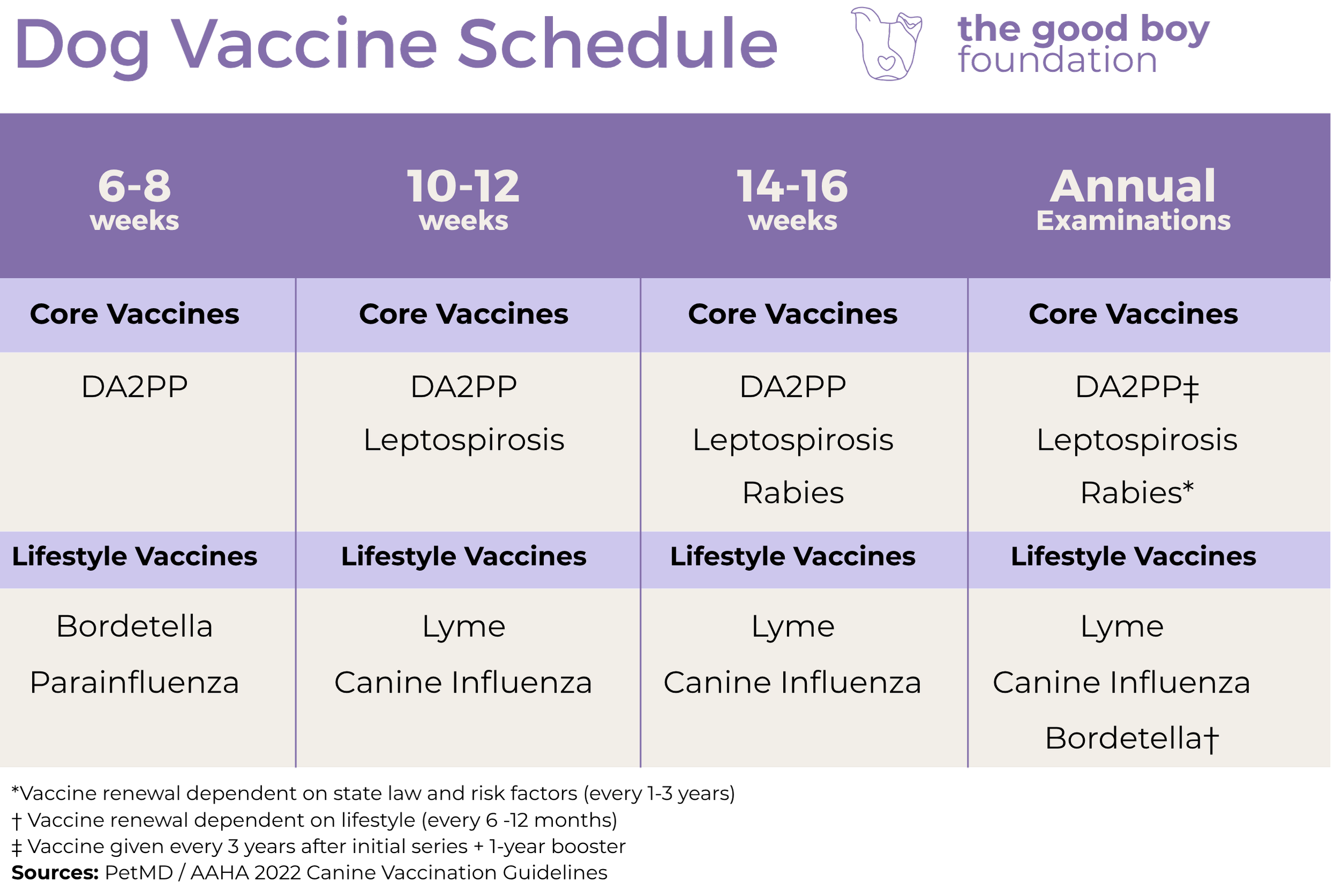
The series begins at 6–8 weeks and continues until at least 16 weeks of age. Missing doses or stopping early leaves dangerous gaps.
Once your dog has completed their puppy series, vaccines don't stop — they just change. Most core vaccines are boostered one year after the puppy series is complete, then shift to every three years for many dogs. Rabies follows its own schedule set by local law. Some lifestyle vaccines, like those for leptospirosis, Bordetella, or Lyme disease, may be recommended annually depending on where you live and how much time your dog spends around other dogs or outdoors. Your vet will help you figure out which vaccines your adult dog actually needs — not every dog needs every vaccine, and a good prevention plan is built around your dog's real life.
Sources: AVMA (American Veterinary Medical Association,Veterinary Partner, VCA Animal Hospitals , PetMD , American Animal Hospital Association, MedVet, PMC / NIH peer-reviewed research, ASPCA Animal Poison Control, the Companion Animal Parasite Council (CAPC), Merck Veterinary Manual, VIN (Veterinary Information Network), Cornell University College of Veterinary Medicine, Zoetis Petcare, Sustainable Vet, and trusted Veterinarians along my 17-year journey as a dog mom
The Good Boy Foundation is committed to providing valuable resources and education to empower pet parents in caring for their furry companions. However, it's important to note that the information provided on our website is intended for educational purposes only and should never replace the advice or treatment provided by a licensed veterinarian. While we strive to offer accurate and helpful guidance, we cannot be held responsible for any outcomes or consequences resulting from the application of this information. Pet parents are encouraged to consult with their veterinarian for personalized guidance and recommendations tailored to their pet's specific needs and circumstances.