

Traveling By Car
For most dog parents, the car is the most common way to travel with their pup. It's also one of the most important places to get safety right.
Keep Your Dog Secured
A loose dog in the car is a safety hazard — for your dog and for you. According to the AAA/Kurgo Pet Passenger Safety Survey, nearly 30% of drivers admit their dog has distracted them while driving. An unrestrained dog can be thrown from their seat during sudden stops or accidents, and can easily dart out of the car the moment a door or window opens in an unfamiliar place. Every year, dogs are lost or injured this way.
The best options for car safety are:
Crash-tested harness: A car safety harness clips into your existing seatbelt and is the most protective option in the event of an accident. Look for harnesses that are crash-tested — the Center for Pet Safety recommends them for both pet and driver protection. Your dog should always ride in the backseat.
Crate or carrier: A hard-sided crate secured to the vehicle with a seatbelt or other anchor is the safest option overall. It keeps your dog contained and protected on all sides. This is especially good for dogs who are anxious or who tend to pace in the car.
Booster seat: For small dogs, a booster seat keeps them secure in the backseat while giving them a view out the window — which can actually help reduce anxiety.
Seatbelt tether: A tether that clips from your dog's harness to the seatbelt buckle gives them a little more freedom to shift positions while still keeping them in the backseat and minimizing driver distraction. Keep in mind tethers alone offer less crash protection than a full harness.
Car barrier: Barriers that separate the front and back seats can reduce distraction and keep your dog in the rear of the vehicle, but they offer less protection in a crash than a harness.
Whatever you choose, dogs should always ride in the backseat. The front seat is for people only.
One more important note: Never transport your dog in the back of an open pickup truck, even for short distances. Dogs can be injured by debris, suffer from cold air forced into their lungs, or fall out entirely.
Plan a Pet-Friendly Route
When road-tripping with your dog, plan your route with them in mind. Most major rest stops have designated dog areas for bathroom breaks and a little exercise — check ahead to make sure your route has safe spots to pull over. Apps like BringFido and AllStays can help you find dog-friendly rest stops, parks, and hotels along the way.
Take frequent breaks — every two to three hours is ideal. Dogs shouldn't be in the car for more than four hours without a break. Use those stops to let your dog stretch, potty, and get some water. Always use a leash the moment you open the car door, even in areas that seem quiet. New environments are stimulating and a dog can bolt before you realize what happened.
Take Practice Trips
If your dog isn't used to the car, don't wait until moving day or vacation to find out — start small. Take short practice drives that end somewhere fun, like the dog park or a friend's house. This builds positive associations with the car and gets them used to longer stretches of time riding. For dogs with significant car anxiety, behavioral training paired with calming support can make a big difference (see our Motion Sickness & Car Anxiety page for more).
Give Them a Workout Before You Leave
A tired dog is a calmer traveler. Before you head out on a long drive, give your dog a solid workout — a long walk, a run, or a play session at the dog park. This helps them settle into the car more easily and may even result in a peaceful mid-drive nap.
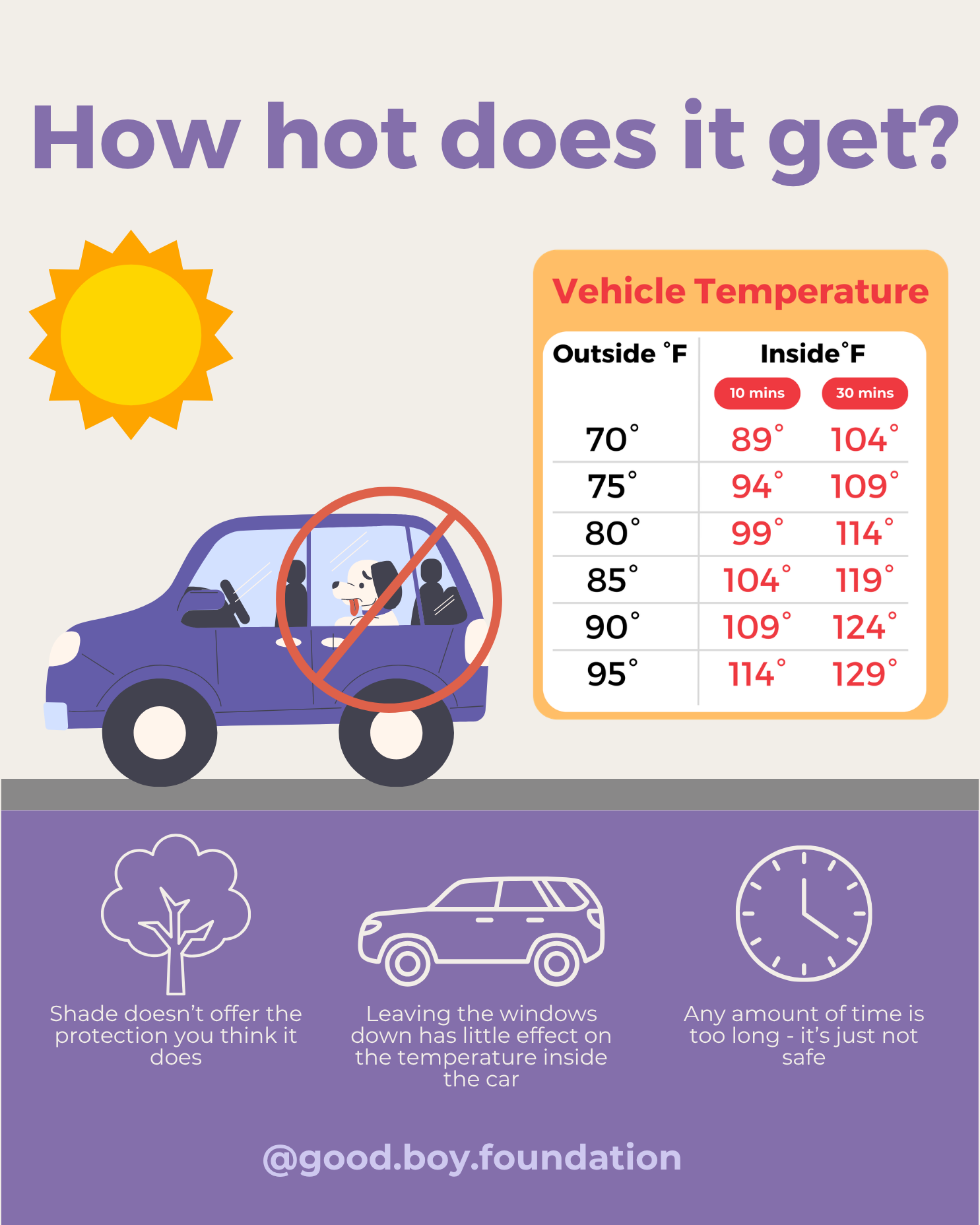
Never Leave Your Dog Alone in the Car
This is non-negotiable. Even with the windows cracked, a car can reach dangerous temperatures extremely quickly. On a 72°F day, the interior of a car can reach over 100°F within minutes. Heat is a serious, life-threatening hazard for dogs. A quick pit stop can feel like nothing to you, but it's far too long for your dog to be left alone — both for temperature safety and to protect against the possibility of theft.
If you're traveling solo, plan accordingly: choose pet-friendly restaurants and stops, or coordinate with a travel companion who can stay with your dog when needed.
Stay Safe at Gas Stations
Any time you're around moving vehicles — including at the pump — your dog should stay secured inside the car. Make sure they're properly restrained so they can't jump out unexpectedly when doors are opened.
Pack Their Backseat Necessities
Keep water, food, treats, waste bags, and a toy within easy reach. A seat cover or hammock-style car cover can protect your upholstery from fur, drool, and muddy paws — and makes cleanup much easier. Many are machine washable.
Safety Equipment and Gear I Used for Deuce
The Good Boy Foundation is committed to providing valuable resources and education to empower pet parents in caring for their furry companions. However, it's important to note that the information provided on our website is intended for educational purposes only and should never replace the advice or treatment provided by a licensed veterinarian. While we strive to offer accurate and helpful guidance, we cannot be held responsible for any outcomes or consequences resulting from the application of this information. Pet parents are encouraged to consult with their veterinarian for personalized guidance and recommendations tailored to their pet's specific needs and circumstances.