

Muzzle Training
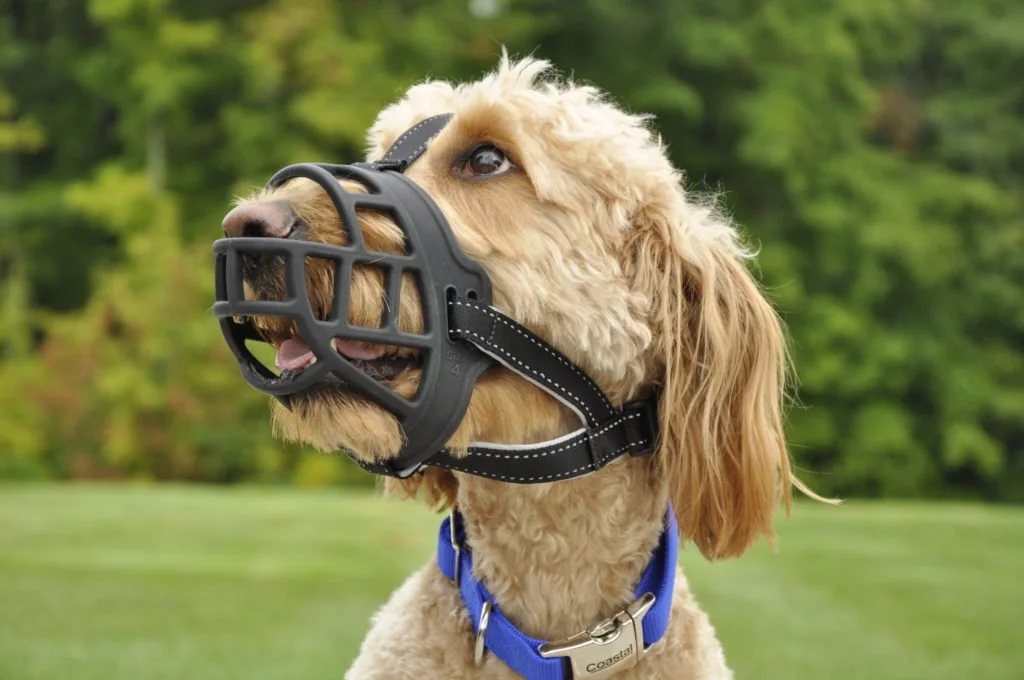
Why Dogs Wear Muzzles — It's Not What You Think
The muzzled dog you pass on the street could be wearing one for any number of reasons that have nothing to do with aggression. Here are some of the most common:
Vet visits and grooming: Even the sweetest, most gentle dogs can act unpredictably when they're in pain, frightened, or being touched in ways they don't like. A muzzle keeps both your dog and the veterinary or grooming staff safe — and many vets appreciate when an owner arrives already prepared.
Scavenging: Some dogs consider everything on the ground a snack — roadkill, garbage, mystery items at the park. A muzzle is a practical solution for dogs who eat things they shouldn't, and it could genuinely save their life.
Post-surgery wound care: Dogs who are recovering from surgery and need to avoid licking a wound may do better in a muzzle during walks or active time than in a cone. It's more comfortable, more practical outdoors, and just as effective.
Reactivity and socialization training: Muzzles give trainers, handlers, and owners the peace of mind to work through behavioral challenges without the risk of someone getting hurt. They're a tool that supports the training process — not a substitute for it.
Emergencies and disasters: If you ever need to evacuate, leave your dog with first responders, or bring them to an emergency shelter, a stressed dog in an unfamiliar, chaotic environment can behave in ways they normally wouldn't. Having muzzle training already in place means one less crisis to manage on top of an already difficult situation.
Travel and public spaces: Some forms of public transportation require muzzles, and certain local laws or ordinances may require them for specific breeds. Being prepared ahead of time means your dog already has a positive relationship with the muzzle before it's ever required.
Choosing the Right Muzzle
Not all muzzles are created equal, and the type matters.
Basket muzzles are the gold standard recommended by veterinarians and behavior specialists. They cover the snout in a basket-style cage that allows your dog to pant freely, drink water, and take treats through the openings. Because they don't force the mouth closed, they are far more comfortable for extended wear and much safer — a dog who can't pant can overheat quickly. Basket muzzles are the only type appropriate for anything beyond a few seconds.
Soft or fabric muzzles hold the mouth mostly closed. They should only be used for very brief situations — like a quick exam — and never for extended wear or in warm conditions. A dog who can't pant cannot regulate their body temperature.
When fitting a muzzle, it should be snug but not tight. You should be able to slip one finger underneath the straps. If it moves around freely, it's too loose and could fall off or shift. If it leaves marks or restricts breathing, it's too tight.
How to Introduce a Muzzle — Go Slow and Make It Positive
The most important rule of muzzle training: never wait until you need it to put it on for the first time. Forcing a muzzle onto an unprepared, anxious dog is stressful for everyone and creates a negative association that's hard to undo. The goal is for your dog to feel completely relaxed — ideally, even happy — when the muzzle comes out.
Step 1: Let the muzzle live in your space. Before you ever attempt to put it on, leave the muzzle out on the floor where your dog can sniff and investigate it freely. Give treats every time they interact with it. You want it to become a normal, familiar object — not something scary that only appears before stressful things happen.
Step 2: Build a positive association. Hold the muzzle out and let your dog sniff it. Every sniff gets a treat. Touch the muzzle to their nose gently — treat. You're not putting it on yet. You're just teaching their brain that muzzle = good things.
Step 3: Nose in, treat through. Smear a little peanut butter (xylitol-free!) or squeeze cheese inside the muzzle and let your dog put their nose in voluntarily to lick it out. Let them pull out freely. Repeat this many times over multiple sessions.
Step 4: Fasten it briefly. Once your dog is comfortable putting their nose in, gently fasten the straps, give a treat through the basket, and take it right back off. Keep it on for only a few seconds at first. Reward immediately when it comes off too.
Step 5: Build up duration gradually. Over multiple sessions, slowly extend the time the muzzle stays on — from seconds to minutes. Always keep sessions calm and positive. If your dog shows signs of stress at any point, go back a step. Progress matters more than speed.
Always put the muzzle on from behind — approach from the back of the head and gently slide it onto the snout before fastening. And always stay calm. Dogs read our energy. If you're tense or frustrated while handling the muzzle, your dog will be too.
Important: What Muzzles Are NOT For
A muzzle is a situational safety tool — it has a purpose, a beginning, and an end. Here's what responsible muzzle use looks like:
Never leave a muzzled dog unsupervised. A muzzle can shift, get caught on something, or become too tight — all of which are dangerous.
Never use a muzzle for extended periods. Muzzles are for specific situations, not hours of wear. The moment the situation is resolved, the muzzle comes off.
Never use a muzzle to stop barking or as a general behavior correction. A muzzle doesn't address the underlying cause of any behavior — it simply prevents certain actions temporarily. For behavior challenges, work with a certified trainer.
Never force a muzzle onto a highly agitated or aggressive dog if doing so puts you at risk of being bitten. In that situation, contact a professional or your local animal authorities for help.
The Bottom Line
When you see a dog wearing a muzzle, think of their owner as someone who planned ahead — someone who cared enough to do the work so their dog could still go to the vet, go on walks, be groomed, and live their life as fully as possible. That's not something to judge. That's something to celebrate.
Every dog can benefit from muzzle training, even if they never need to wear one in an emergency. It's a gift you give your dog before the situation arises — and one of the most loving, responsible things you can do.
When most people see a dog wearing a muzzle, their first thought is often that the dog must be dangerous. It's a common assumption — and it's wrong. A muzzled dog is not a bad dog. A muzzled dog has a responsible, thoughtful owner.Muzzle training your dog from an early age is one of the most practical things you can do for their safety, comfort, and overall well-being. There are many reasons why a dog may need to wear a muzzle at some point in their life, regardless of their temperament or history. By introducing a muzzle gradually and positively, you can help your dog feel comfortable and at ease wearing it — which means less stress for everyone when a situation actually calls for it. Muzzles are invaluable tools for managing fear, preventing unwanted behaviors, and protecting both your dog and the people around them. It's time to challenge the unfair stigma and recognize muzzles for what they are: a responsible, caring choice that every dog parent should have in their toolkit.
Sources: AVMA (American Veterinary Medical Association,Veterinary Partner, VCA Animal Hospitals , the American Animal Hospital Association (AAHA), the American College of Veterinary Behaviorists (ACVB), the ASPCA, American Veterinary Society of Animal Behavior (AVSAB), Dogster (reviewed and fact-checked by Dr. Ashley Darby, DVM), Company of Animals UK and trusted Veterinarians along my 17-year journey as a dog mom
The Good Boy Foundation is committed to providing valuable resources and education to empower pet parents in caring for their furry companions. However, it's important to note that the information provided on our website is intended for educational purposes only and should never replace the advice or treatment provided by a licensed veterinarian. While we strive to offer accurate and helpful guidance, we cannot be held responsible for any outcomes or consequences resulting from the application of this information. Pet parents are encouraged to consult with their veterinarian for personalized guidance and recommendations tailored to their pet's specific needs and circumstances.