

Understanding Pain & Discomfort in Dogs
Your dog can't tell you when something hurts. But their body is always sending signals — you just have to know what to look for.
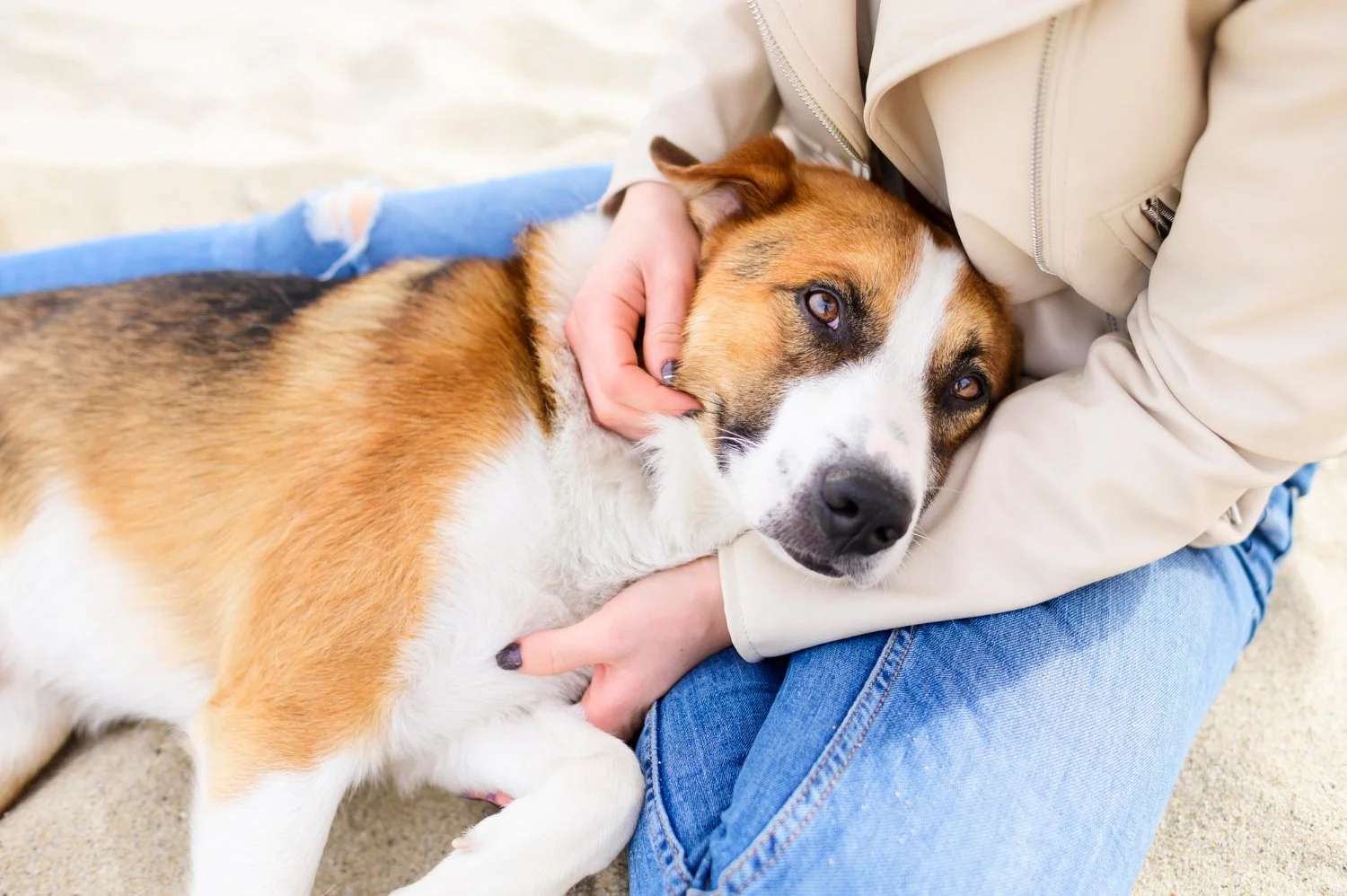
Recognizing Pain & Discomfort in Dogs
Dogs are wired to hide pain — an instinct inherited from ancestors who had to appear strong to survive. By the time a dog shows obvious signs of pain, they've often been hurting for a while. Knowing the subtle signals is one of the most important things a dog owner can learn.
Physical Signs
Limping or favoring one leg
Stiffness when getting up, especially after rest or sleep
Reluctance to climb stairs, jump into the car, or get onto furniture
Slowing down on walks, tiring more quickly
Muscle loss, particularly in the hindquarters
Swollen or warm joints
Behavioral Signs
Sleeping more than usual or seeming withdrawn
Irritability, snapping, or growling when touched in certain areas
Restlessness — getting up and lying back down repeatedly
Excessive licking or chewing at a specific body part
Panting at rest (a frequently overlooked signal)
Avoiding slippery floors or hesitating on uneven surfaces
Having accidents indoors — squatting to eliminate may be painful
Reduced interest in food, play, or interaction
Many behaviors we attribute to 'just getting old' — slowing down, sleeping more, becoming grumpy, losing interest in play — are often signs of manageable pain.
Dogs do not have to live in discomfort as a normal part of aging. If something feels off, it's worth a conversation with your vet.
Safe Pain Management Options for Senior Dogs
Arthritis affects an estimated 80% of dogs over age 8. It is the most common source of chronic pain in senior dogs — but it is far from the only one. Dental disease, spinal conditions, hip dysplasia, cancer, and organ disease can all cause significant pain in older dogs. The first step is always an accurate diagnosis from your veterinarian.
⚠️ Never Give Human Pain Medications
Ibuprofen (Advil), naproxen (Aleve), and acetaminophen (Tylenol) are toxic to dogs — even in small doses. They can cause kidney failure, gastrointestinal bleeding, and death. Over-the-counter aspirin is also not recommended without veterinary guidance.
Prescription Medications
NSAIDs (Non-Steroidal Anti-Inflammatory Drugs) The first-line medical treatment for arthritis and chronic pain. FDA-approved options include carprofen (Novox, Rimadyl), meloxicam (Metacam), and grapiprant (Galliprant). Safe and effective when used as prescribed. Requires routine bloodwork monitoring for kidney and liver function.
Gabapentin Originally an anti-seizure drug; now widely used for nerve-related and chronic pain in dogs. Works on different pathways than NSAIDs — commonly added when NSAIDs alone aren't providing full relief. Most common side effect is mild sedation.
Amantadine Used as an add-on for dogs who have developed tolerance to other pain medications. Targets NMDA receptors in the nervous system. Rarely used as a standalone therapy.
Tramadol Occasionally used for breakthrough or acute pain. Research suggests lower efficacy in dogs than previously believed, but remains part of some multimodal protocols.
Weight Management
If your senior dog is overweight, helping them lose even a modest amount of weight is one of the most impactful pain management interventions available. Extra weight places disproportionate stress on already-compromised joints. Many dogs show more improvement from weight loss alone than from medication. Ask your vet about a tailored weight management plan.
Home Environment Adjustments
Orthopedic or memory foam bed — relieves pressure on joints during sleep
Non-slip rugs or mats on hardwood and tile floors
Ramps instead of stairs or jumping (car, couch, bed)
Raised food and water bowls — reduces neck and shoulder strain
Warm compresses on sore joints for 10–15 minutes, especially on cold mornings
Shorter, more frequent walks rather than long infrequent ones
Warm, draft-free sleeping area — cold worsens arthritis significantly
Holistic & Complementary Therapies for Senior Dogs
Complementary therapies aren't fringe ideas — many are offered by board-certified veterinary rehabilitation specialists and endorsed by the American Animal Hospital Association. They work best alongside conventional care, not as a replacement for veterinary diagnosis and treatment.
Hydrotherapy
What it Does: Warm water buoys the dog's weight, enabling exercise with minimal joint stress. Builds muscle and range of motion without impact.
Best For: Post-surgery recovery, arthritis, hip dysplasia, muscle atrophy
Laser Therapy
What it Does: Therapeutic light stimulates cellular healing and reduces inflammation. Non-invasive, painless, no sedation required.
Best For: Arthritis, wound healing, post-surgery, soft tissue injuries
Acupuncture
What it Does: Fine needles at specific points stimulate the nervous system and trigger natural pain-relieving compounds. Supported by research for musculoskeletal pain.
Best for: Arthritis, spinal pain, post-surgery, nerve damage
Therapeutic Massage
What it Does: Improves circulation, relieves muscle tension, reduces anxiety. Therapist can teach home techniques.
Best For: Muscle stiffness, anxiety, post-surgery, end-of-life comfort
Canine Rehabilitation
What it Does: Customized exercise program to rebuild muscle, restore range of motion, correct compensatory movement. CCRP or CCRT certified practitioners.
Best For: Any dog with chronic pain, post-surgical recovery, mobility decline
Finding a Specialist
• Veterinary rehabilitation: American College of Veterinary Sports Medicine and Rehabilitation — vsmr.org
• Veterinary acupuncture: International Veterinary Acupuncture Society — ivas.org
• Certified rehabilitation practitioners: Canine Rehabilitation Institute — caninerehabinstitute.com
How to Calm a Dog After Surgery
Coming home from surgery is disorienting for a dog. The anesthesia, the soreness, the cone around their neck — it's a lot to process. The two most important things you can do are: control their environment and stay calm yourself. Dogs read their owner's emotional state with remarkable accuracy.
What's Normal in the First 24–48 Hours
Grogginess, stumbling, or mild disorientation — normal effect of anesthesia
Sleeping far more than usual
Reduced appetite; offer small amounts of bland food (plain boiled chicken and rice)
Mild shivering — keep them warm with a blanket in a draft-free space
Some whimpering or restlessness — give prescribed pain medication as directed
Setting Up a Recovery Space
Quiet room, away from children, other pets, and noise
Soft bed at floor level — absolutely no jumping on or off furniture
Non-slip flooring or area rugs if floors are slippery
Temperature 68–75°F — warm and draft-free
Baby gate to block stairways and hazardous areas
Keep other pets separated — even friendly pets can accidentally injure a surgical dog
The E-Collar (Cone): Non-Negotiable
Dogs who lick incisions have up to 30% more post-operative complications. The cone stays on for the full recovery period (typically 10–14 days) — during sleep, meals, and bathroom trips. It should extend 2 inches past your dog's nose to prevent access to the wound. If using an alternative (inflatable donut, soft recovery suit), confirm with your vet that it genuinely prevents access.
Incision Care
Check once or twice daily — edges should be closed, skin slightly pink
No baths, swimming, or water exposure for 10–14 days
Do not apply any ointment, hydrogen peroxide, or product unless your vet instructs
Keep your dog from licking — cone on at all times
Mental Stimulation Without Movement
Puzzle feeders and slow feeder bowls (used lying down)
Long-lasting chews appropriate to their post-surgery diet
Gentle training exercises: sit, stay, focus — brain work, no body work
Calming music — studies support classical music for reducing canine anxiety
Call Your Vet Immediately If You See:
Increasing redness at the incision after day 3
Swelling, or yellow/green or foul-smelling discharge
Wound edges separating or the incision opening — this is a veterinary emergency
Vomiting more than once, or refusal to eat for more than 48 hours
Difficulty breathing, pale gums, or extreme lethargy
Signs of significant pain not controlled by prescribed medication
Sun Safety for Dogs
Yes — and repeated sun exposure without protection can cause permanent skin damage and increase the risk of skin cancers including squamous cell carcinoma, hemangiosarcoma, and malignant melanoma. Fur provides some protection, but not everywhere.
Most Vulnerable Areas
Nose — especially pink or unpigmented noses
Ear tips and inside of upright ears
Belly and groin — naturally thin or absent fur
Bridge of the muzzle and around the eyes
Any areas with thin, white, or missing fur (scars, recent shave, skin conditions)
Higher Risk Dogs
White or light-colored coat
Pink or unpigmented nose
Short or sparse fur
Greyhound, Whippet, Dalmatian, Boxer, Bull Terrier, Pit Bull
Active sunbathers / outdoor dogs
High altitude or southern climates
Lower Risk Dogs (But Not Free From Risk)
Dark, pigmented coat
Black or dark nose
Dense double coat
Husky, Labrador, German Shepherd
Primarily indoor dogs
Moderate UV climates
Signs of Sunburn
Red, pink, or inflamed skin — warm to the touch
Dry, flaking, or peeling skin (especially nose and ears)
Curling at the ear edges — a classic sign of ear tip sunburn
Sensitivity or flinching when the area is touched
Blistering — a sign of severe sunburn requiring vet attention
Treating Mild Sunburn at Home
Move your dog indoors and out of sun immediately
Apply cool (not ice cold) compress to affected areas
Offer plenty of fresh water
Plain aloe vera gel (no additives, no alcohol) soothes and cools skin
Cool oatmeal bath: 1 cup oats blended to powder in cool water, 10-minute soak
Keep the area clean and prevent licking
⚠️ Never Use Human Sunburn Products
Many human products contain zinc oxide or salicylates — both toxic to dogs when licked.
This includes Solarcaine, most after-sun lotions, and aloe gels with lidocaine or alcohol.
Always check with your vet before applying any product to sunburned skin.
Prevention
Limit outdoor time between 10am–4pm in summer, especially for high-risk dogs
Always provide a shaded area in the yard — dogs don't always self-regulate sun exposure
Use pet-safe sunscreen on nose, ear tips, belly, and any exposed skin — reapply every 4–6 hours
Consider UV-protective clothing (sun shirts, rashguards) for high-risk dogs or extended outdoor time
Extra caution at high altitude and near water — UV intensity is significantly higher in both settings
Never use human sunscreen — choose products specifically formulated for pets or vet-approved options
See Your Vet If:
There is blistering, open sores, or severely damaged skin
The area shows no improvement after 2–3 days
You notice any new growths, thickened skin, or discoloration in sun-exposed areas
Any skin change that seems unusual or doesn't resolve — early detection of skin cancer matters
Sources: AVMA (American Veterinary Medical Association,Veterinary Partner, VCA Animal Hospitals , PetMD , American Animal Hospital Association, MedVet, PMC / NIH peer-reviewed research, Merck Veterinary Manual, VIN (Veterinary Information Network), Cornell University College of Veterinary Medicine, Canine Arthritis Resources and Education, Zoetis Petcare, Sustainable Vet, and trusted Veterinarians along my 17-year journey as a dog mom
The Good Boy Foundation is committed to providing valuable resources and education to empower pet parents in caring for their furry companions. However, it's important to note that the information provided on our website is intended for educational purposes only and should never replace the advice or treatment provided by a licensed veterinarian. While we strive to offer accurate and helpful guidance, we cannot be held responsible for any outcomes or consequences resulting from the application of this information. Pet parents are encouraged to consult with their veterinarian for personalized guidance and recommendations tailored to their pet's specific needs and circumstances.