

Eye Conditions & Discharge
Eye Conditions & Discharge
A small amount of clear crust or "sleep" in the inner corners of your dog's eyes in the morning is completely normal. What's not normal is yellow, green, or excessive discharge — or any sign that your dog's eye is bothering them.
Signs of an eye problem:
Yellow, green, or cloudy discharge from one or both eyes
Excessive clear or watery discharge (called epiphora)
Redness or swelling around the eye or eyelid
Squinting, frequent blinking, or holding the eye shut
Pawing at or rubbing the eye on furniture/carpet
Cloudiness or a bluish-white appearance to the eye itself
Visible third eyelid (the pinkish membrane in the inner corner)
Common eye conditions:
Conjunctivitis ("pink eye")
Inflammation of the conjunctiva (the lining around the eye). Can be caused by bacterial or viral infection, allergies, irritants, or autoimmune conditions. Signs include red, irritated eyes and discharge ranging from clear to thick and yellow-green. Requires veterinary treatment — topical antibiotics or anti-inflammatory drops depending on the cause.
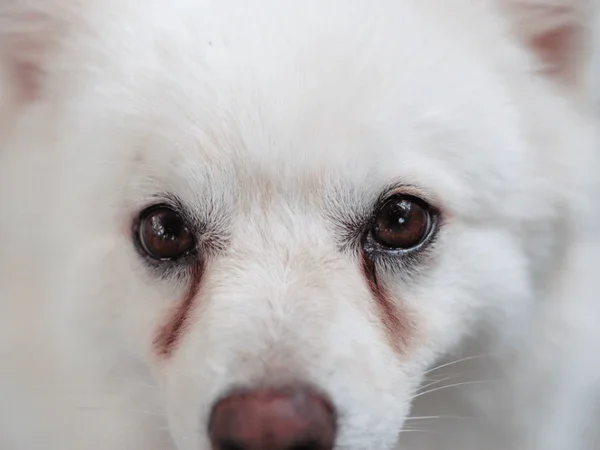
Epiphora (excessive tearing)
Overflow of tears down the face, causing rust-colored staining on the fur below the eyes. Common in small and brachycephalic (flat-faced) breeds. Can result from blocked tear ducts, facial anatomy, or underlying irritation.
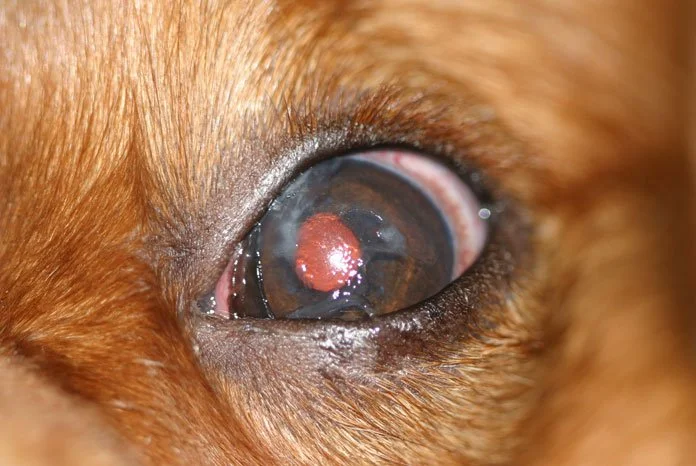
Dry Eye
The tear glands don't produce enough tears, leaving the eye chronically dry and inflamed. Signs include thick, ropy, mucus-like discharge, dull or hazy eyes, and frequent blinking. Common in Bulldogs, Shih Tzus, West Highland Terriers, and Cocker Spaniels. Managed with lifelong prescription eye drops (cyclosporine or tacrolimus) that stimulate tear production.
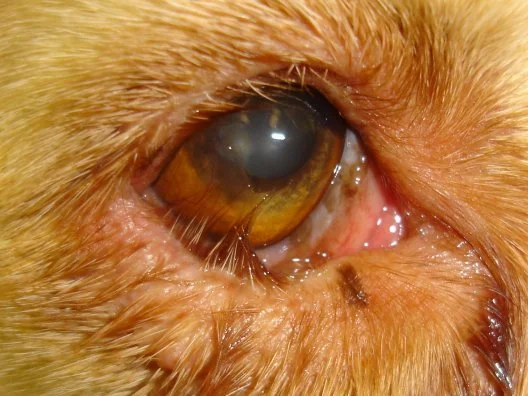
Entropion
Structural eyelid abnormality where the lid rolls inward, causing lashes to rub the eye. This can cause chronic irritation and infection. Often surgical.
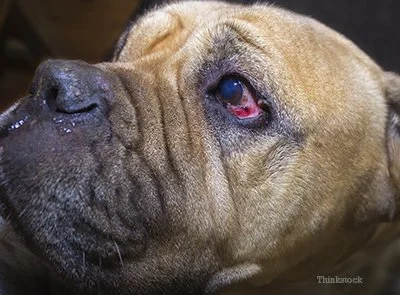
Ectropion
Structural eyelid abnormality where the lid rolls outward, leaving the eye exposed. This can cause chronic irritation and infection. Often surgical.
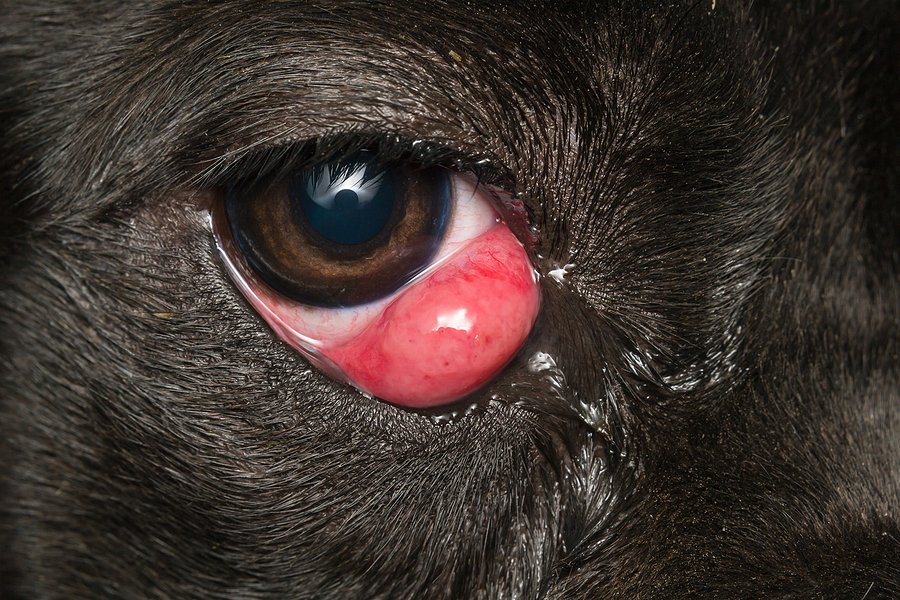
Cherry Eye
Cherry eye in dogs is the prolapse (popping out) of the third eyelid tear gland, appearing as a red, fleshy mass in the corner of the eye. Common in young dogs and specific breeds like Bulldogs and Beagles, it causes irritation, discharge, and dry eye. Surgical repositioning of the gland is the standard treatment to avoid chronic issues.
What to do:
Any discharge beyond normal morning crust warrants a vet call — ideally same-day if the eye appears painful, swollen, or cloudy. Do not apply human eye drops to your dog's eyes unless your vet specifically directs you to. If your dog is pawing at their eye, put an e-collar on to prevent self-injury while you arrange care.
Eye issues can escalate quickly. A scratched cornea, for example, can progress to a serious ulcer within 24–48 hours. When in doubt, get it checked the same day.
Sources: AVMA (American Veterinary Medical Association,Veterinary Partner, VCA Animal Hospitals , PetMD , American Animal Hospital Association, MedVet, PMC / NIH peer-reviewed research, ASPCA Animal Poison Control, Merck Veterinary Manual, VIN (Veterinary Information Network), Cornell University College of Veterinary Medicine, Canine Arthritis Resources and Education, Zoetis Petcare, Sustainable Vet, and trusted Veterinarians along my 17-year journey as a dog mom
The Good Boy Foundation is committed to providing valuable resources and education to empower pet parents in caring for their furry companions. However, it's important to note that the information provided on our website is intended for educational purposes only and should never replace the advice or treatment provided by a licensed veterinarian. While we strive to offer accurate and helpful guidance, we cannot be held responsible for any outcomes or consequences resulting from the application of this information. Pet parents are encouraged to consult with their veterinarian for personalized guidance and recommendations tailored to their pet's specific needs and circumstances.