

Dental Health
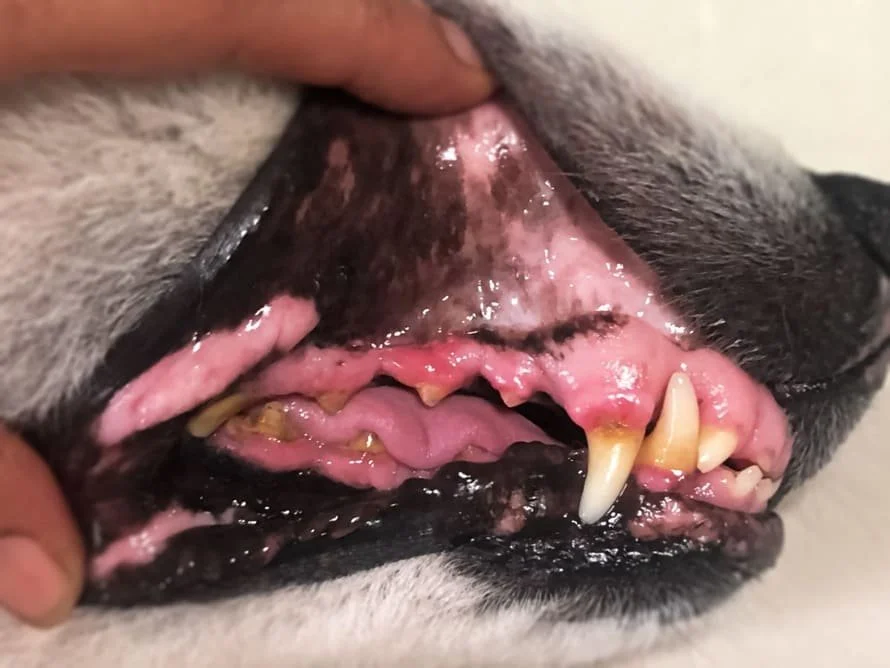
By age 3, up to 80–90% of dogs have some degree of periodontal disease — and most owners have no idea, because dogs are very good at hiding dental pain. Dental disease isn't just a mouth problem. The bacteria from infected gums can enter the bloodstream and damage the heart, kidneys, and liver.
Signs of dental problems:
Bad breath — the most common early sign
Yellow or brown buildup on teeth (tartar)
Red, swollen, or bleeding gums
Pawing at the mouth or rubbing the face
Dropping food while eating or chewing on one side
Loose or missing teeth
Reluctance to eat hard food or chew toys they previously enjoyed
Drooling more than usual, sometimes with blood
Swelling below the eye (may indicate an abscessed upper tooth root).
How dental disease progresses:
It starts with plaque — a film of bacteria that forms on teeth daily. Without removal, plaque hardens into tartar (the brown/yellow crust you see), which builds up above and below the gum line. This leads to gingivitis (inflamed gums) and eventually periodontitis — the destruction of the ligaments and bone holding the teeth in place. Once a tooth's supporting structures are gone, extraction is the only option.
Treatment:
Professional dental cleaning under anesthesia is the only way to properly clean below the gum line. Anesthesia is necessary — a dog can't hold still for the thorough exam and cleaning needed, and without it, the parts of the tooth where disease actually lives can't be reached. Anesthesia-free dental cleanings (offered by some groomers) only address the visible surface and are not a substitute for veterinary dental care.
Tooth extractions are common with periodontitis — and dogs do remarkably well without teeth. Eating soft food is far better than living with a painful, infected mouth.
Home care — what actually works:
Tooth brushing — daily is ideal; even a few times a week makes a real difference. Use pet-specific toothpaste (human toothpaste contains xylitol or fluoride, which are toxic to dogs). Start slowly, with finger brushes, and build up over time.
Dental chews — look for the VOHC (Veterinary Oral Health Council) seal, which means the product has been independently tested and shown to reduce plaque or tartar
Dental water additives — VOHC-approved options can help reduce bacterial load
Diet — dry kibble provides minimal dental benefit (a common myth); what matters most is brushing
Prevention is far cheaper than treatment. A professional cleaning averages $300–$700 depending on what's needed. Severe periodontitis with multiple extractions can run $1,500–$3,000+. Starting a home care routine early and getting regular professional cleanings (typically annually) is the most effective prevention.
Ask your vet to grade your dog's dental disease at every annual exam — they use a 0–4 scale. Catching gingivitis (Grade 1–2) early means treatment is simple and reversible.
Sources: AVMA (American Veterinary Medical Association,Veterinary Partner, VCA Animal Hospitals , PetMD , American Animal Hospital Association, MedVet, PMC / NIH peer-reviewed research, ASPCA Animal Poison Control, Merck Veterinary Manual, VIN (Veterinary Information Network), Cornell University College of Veterinary Medicine, Canine Arthritis Resources and Education, Zoetis Petcare, Sustainable Vet, and trusted Veterinarians along my 17-year journey as a dog mom
The Good Boy Foundation is committed to providing valuable resources and education to empower pet parents in caring for their furry companions. However, it's important to note that the information provided on our website is intended for educational purposes only and should never replace the advice or treatment provided by a licensed veterinarian. While we strive to offer accurate and helpful guidance, we cannot be held responsible for any outcomes or consequences resulting from the application of this information. Pet parents are encouraged to consult with their veterinarian for personalized guidance and recommendations tailored to their pet's specific needs and circumstances.