When it's time to say goodbye.
There's no right answer. There's no perfect moment. There's only the love you have for your dog, the guidance of your trusted veterinarian, and the quiet knowing that you will do right by them — whatever that looks like. We're here for this part, too.
End of Life Support
Quality of Life Assessment
What to Ask Your Veterinarian
In-Home Euthanasia
Grief Support
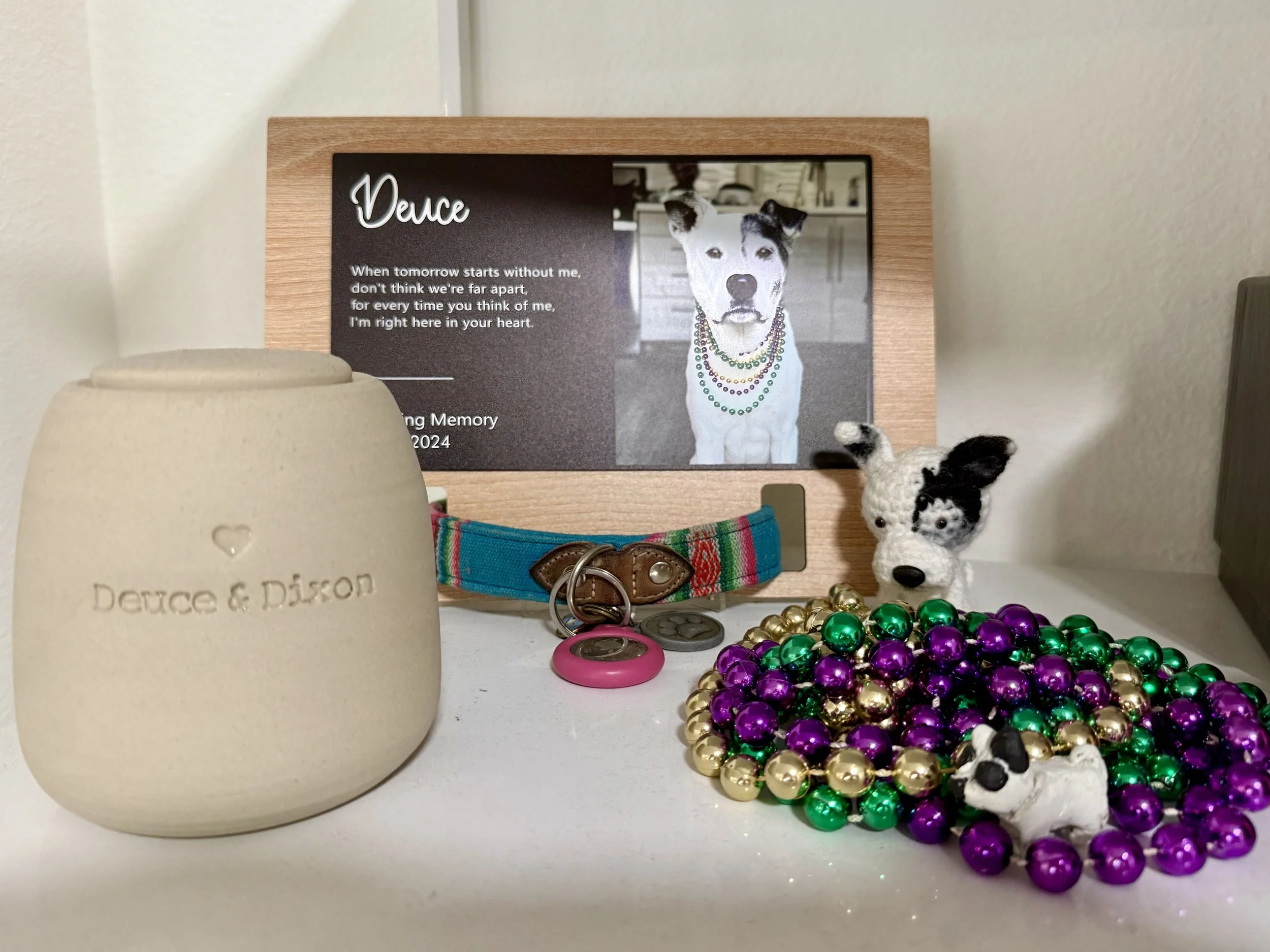
Memorializing Your Dog
Quality of Life Assessment
Is my dog still having good days?
This is the question every family asks — and it's one of the hardest to answer on your own. Dr. Alice Villalobos, a veterinary oncologist and pioneer in animal hospice care, developed the HHHHHMM Quality of Life Scale specifically to help families assess their dog's wellbeing in a structured, compassionate way. It won't make the decision for you — but it can help you see more clearly.
How to use it: Score your dog in each of the seven categories below on a scale of 1 to 10 (10 = doing well, 1 = very poor). Add up your scores. A total above 35 out of 70 is generally considered an acceptable quality of life. Track it weekly — watching the trend over time is often more revealing than any single day's score.
H — Hurt Is your dog's pain being managed? Watch for labored breathing, inability to breathe comfortably, crying out, or reluctance to move. A dog who cannot breathe well or whose pain cannot be controlled is scoring low here. Score 1–10.
H — Hunger Is your dog eating enough to sustain their body? A dog who is too weak or nauseous to eat — even when offered their favorite foods — may be telling you something important. Hand-feeding is okay if it's working and they're getting adequate nutrition. Score 1–10.
H — Hydration Is your dog drinking enough, or showing signs of dehydration — dry gums, sunken eyes, loss of skin elasticity? Your vet can also administer subcutaneous fluids if needed. Score 1–10.
H — Hygiene Can you keep your dog clean and comfortable? Pressure sores, infections, and the inability to control bodily functions can cause significant suffering. This category is about their dignity as much as their health. Score 1–10.
H — Happiness Does your dog still have moments of joy? Do they respond to your voice, notice a favorite toy, enjoy being held or petted? Even small expressions of interest and engagement matter here. A dog who seems "turned off" to life is telling you something. Score 1–10.
M — Mobility Can your dog get up and move enough to satisfy their basic needs and desires? Mobility needs vary by size, breed, and temperament — a small dog may live contentedly with significant mobility limitations that a large active dog would find deeply distressing. Score 1–10.
M — More Good Days Than Bad Step back and look at the whole picture. Are there more days where your dog seems comfortable and present than days filled with vomiting, pain, seizures, or confusion? When the bad days consistently outweigh the good ones, that shift matters. Score 1–10.
There's no score that makes this easy. But tracking these seven areas over time — and sharing the results with your veterinarian — can help you both have an honest, informed conversation about what comes next.
Download a printable version of the HHHHHMM Scale: Pawspice Quality of Life Scale (PDF)
What to Ask Your Veterinarian
Questions worth asking — even the hard ones.
Many families leave their vet's office without asking what they most needed to know — not because they didn't want to, but because it's hard to find the words when you're scared. Here are questions worth writing down and bringing with you.
Some questions to ask:
About the diagnosis and prognosis:
What is the cancer doing in my dog's body right now, and where is it likely to go?
What does "good prognosis" or "guarded prognosis" mean for my dog specifically?
If we stop treatment, what would that look like — what should I expect?
About pain and comfort:
How do I know if my dog is in pain? What signs should I watch for at home?
Is the pain being managed well, or is there more we can do?
What is the difference between pain and suffering?
About quality of life:
Using the HHHHHMM scale — where would you score my dog today?
What changes should prompt me to call you between appointments?
How will I know when it's time?
About end-of-life options:
What does the natural dying process look like for a dog with this cancer?
What is in-home euthanasia, and is it available to us?
What does the euthanasia process actually involve — what will I see and feel?
Can our whole family be there, including children?
What happens to my dog's body afterward — what are our options?
About your own grief:
I'm struggling. Is that normal? Are there resources you'd recommend?
There are no wrong questions. A good veterinarian will welcome every one of these.
In-Home Euthanasia
Saying goodbye at home.
Many families don't know this option exists — and for those who discover it, it can make one of the hardest moments of their lives a little more peaceful.
In-home euthanasia is exactly what it sounds like: a veterinarian comes to your home, and your dog is allowed to pass in the place they feel safest — their own bed, their favorite spot in the yard, surrounded by the people who love them. No car ride. No waiting room. No fluorescent lights.
What to expect: A veterinarian will arrive at your home — usually dressed casually, not in scrubs — and will take time to get acquainted with your dog before anything begins. Your dog is first given a sedative to relax them into a deeply comfortable, sleepy state. This typically takes 5 to 15 minutes. Once they're fully at peace, the veterinarian administers a medication that stops the heart quickly and gently — the process itself takes less than a minute. You can hold your dog throughout. You can talk to them. You can take whatever time you need.
Your dog does not have to be afraid. And neither do you.
A note for families: It's normal for a dog's muscles to release — you may notice some sounds, movement, or bodily fluids as they pass. Your veterinarian will prepare you for what to expect. Many families describe the experience as quiet, gentle, and — even in the grief of it — a gift they were glad to give their dog.
Finding a provider: Lap of Love is the largest national network of veterinarians specializing in in-home hospice and euthanasia. They serve most major metro areas across the US and offer a free service to help you find a provider near you. Their pet loss support line is 855-352-5683.
If Lap of Love doesn't serve your area, ask your primary veterinarian — many are willing to make house calls for end-of-life care, and your vet may know local providers.
Memorializing Your Dog
Art & Visual Tributes
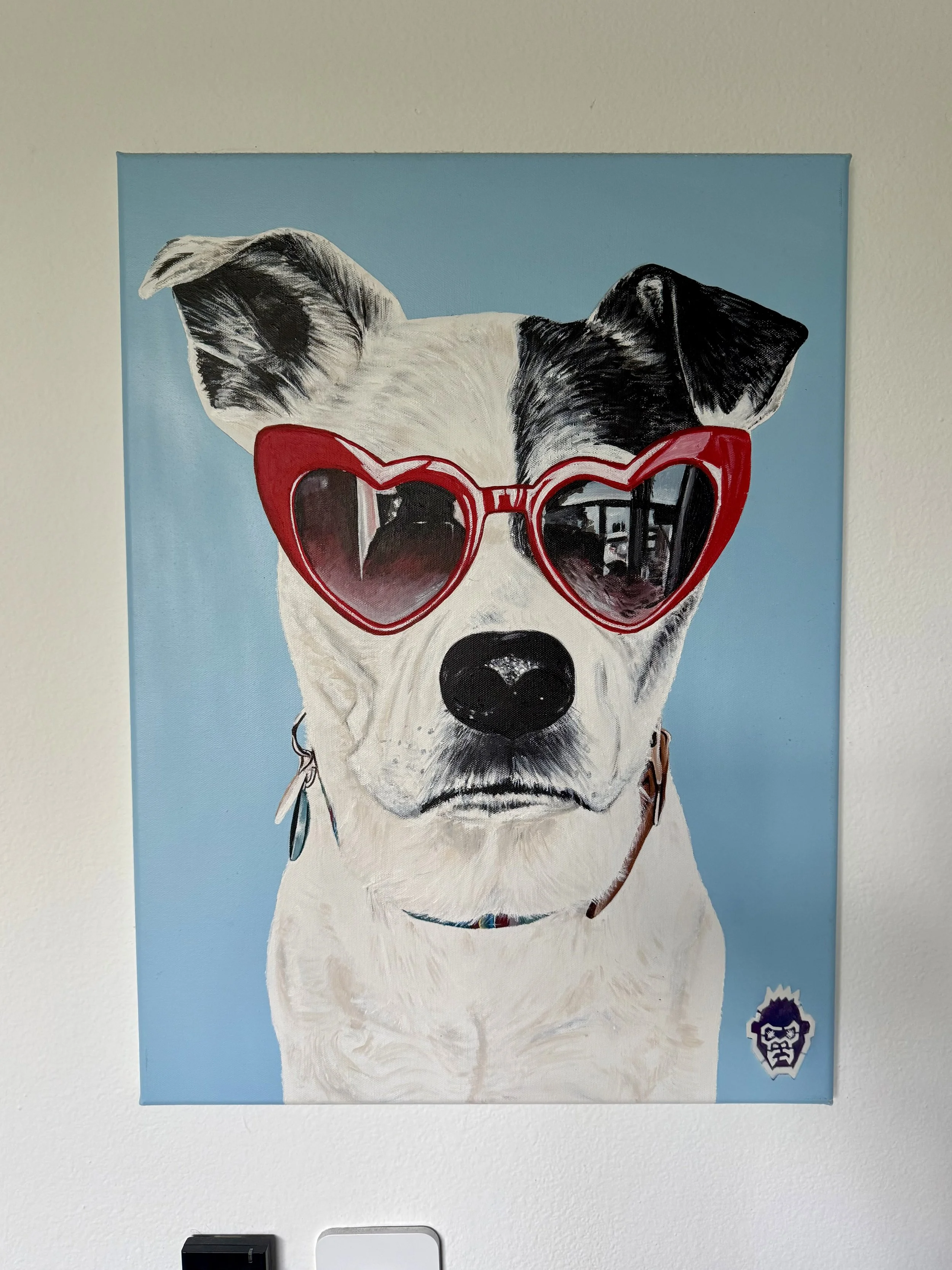
Custom portrait commission — A painted or drawn portrait of your dog, based on your favorite photos. Artists on Etsy, Instagram, and platforms like PetPortraits.com specialize in this. Styles range from realistic oil to whimsical watercolor.
Watercolor painting — Loose, soft, and painterly. Many families find watercolor portraits feel more emotional than photorealistic ones. Search "custom watercolor pet portrait" on Etsy for hundreds of artists.
Oil or acrylic painting — A more formal, heirloom-quality portrait. Can be commissioned at any size and framed as a lasting piece of home art.
Paw print casting — A mold of your dog's paw made in clay or plaster. Many veterinarians and in-home euthanasia providers (including Lap of Love) offer a paw print as part of their service. You can also use kits at home while your dog is still alive.
Nose print casting — Less commonly known — a nose print is as unique to a dog as a fingerprint is to a person. Kits are available online.
Painted vinyl record — Companies like CremationArtGlass.com can incorporate your dog's ashes into the paint of a hand-painted vinyl record — functional as art, and quietly meaningful.
Wearable Memorials
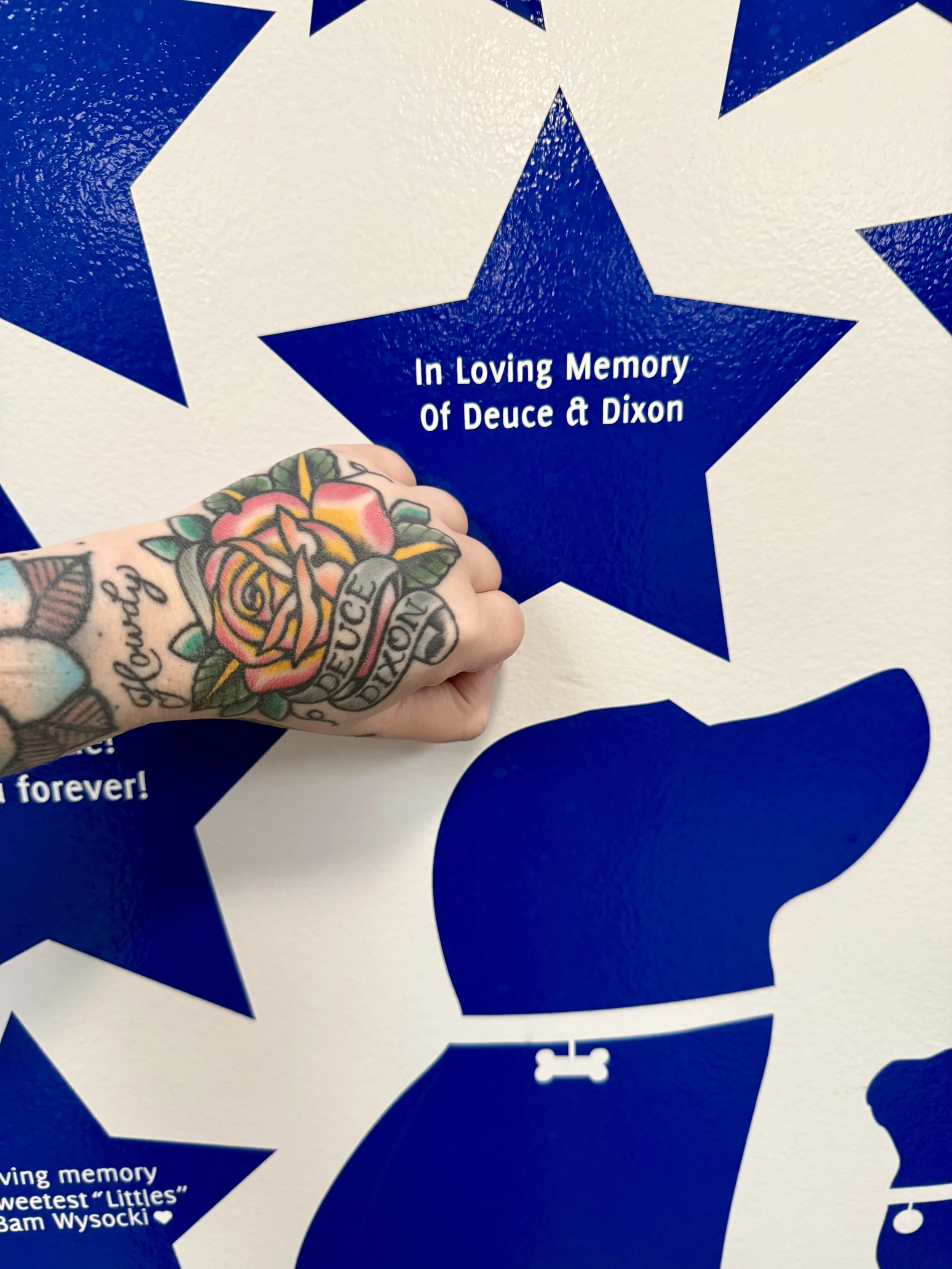
Tattoo — portrait — A realistic portrait of your dog's face, usually in black and gray. Requires a realism tattoo artist with animal portrait experience. Take time to find the right artist by reviewing portfolios carefully.
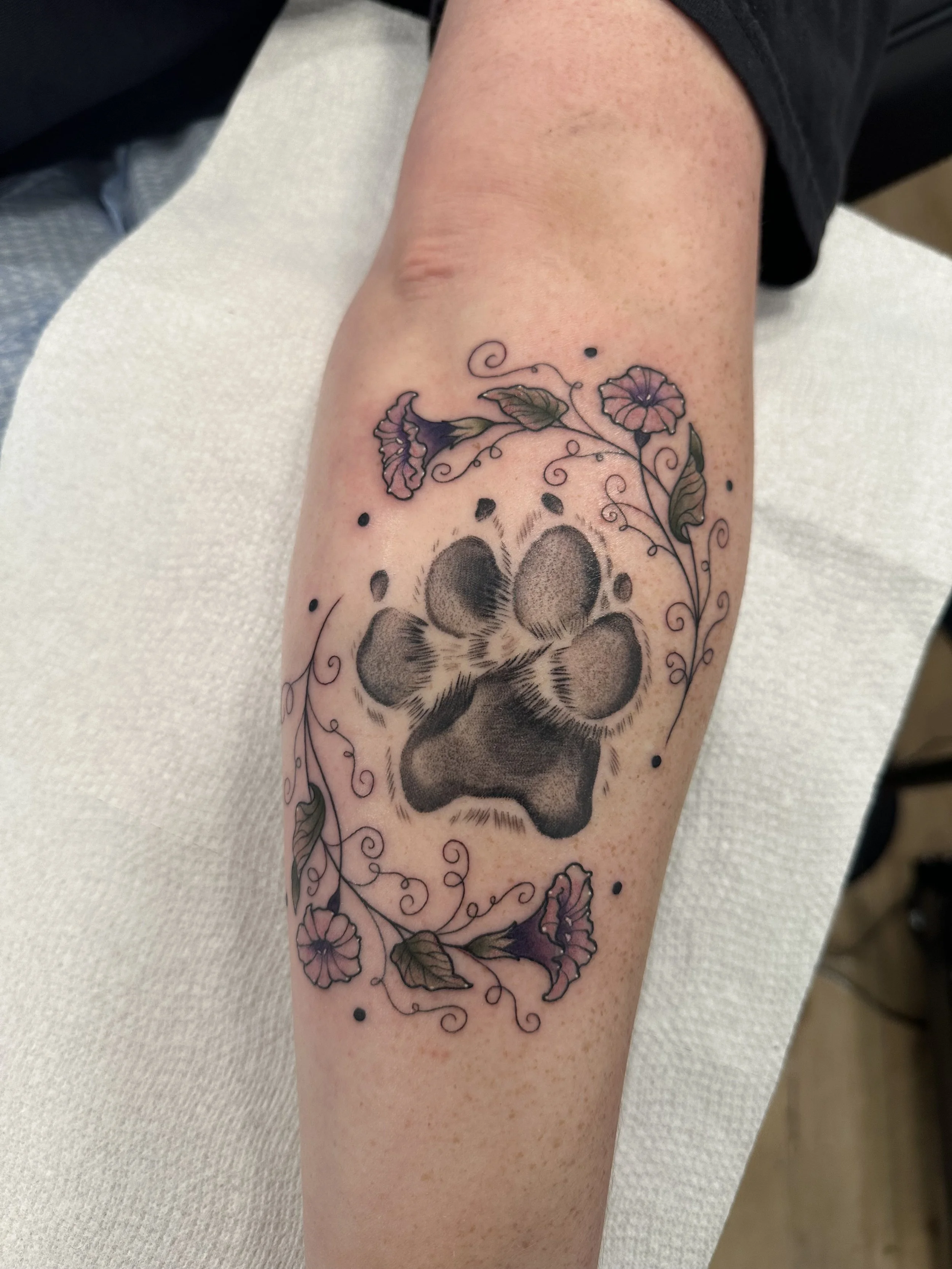
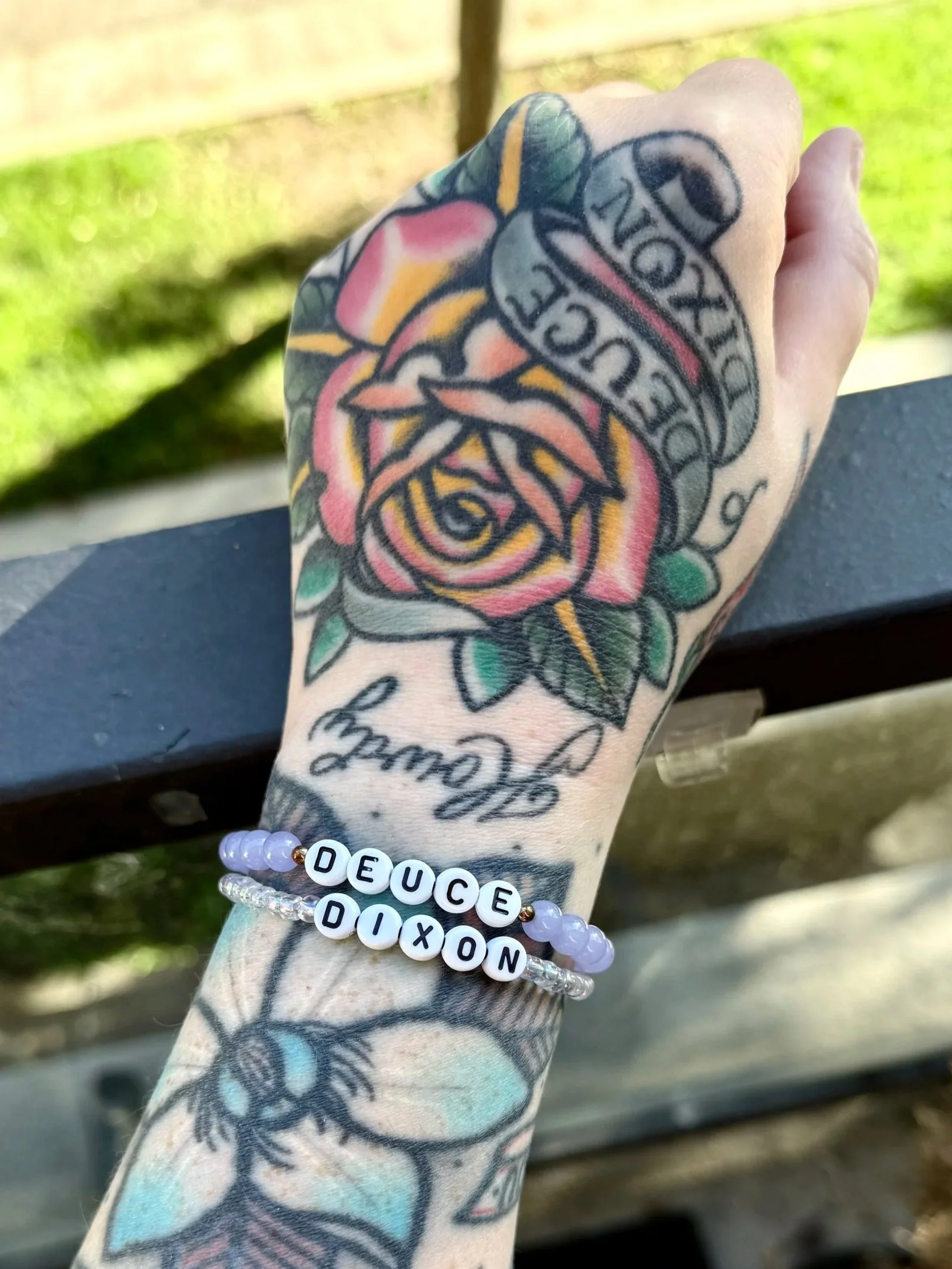
Tattoo — paw print, silhouette, or name — Simpler and often equally meaningful. A paw print, their name in your handwriting, a nose print outline, or a simple silhouette of their breed.
Tattoo with ashes infused in the ink — Some artists and specialized services (like Cremation Ink®) can sterilize and process a small amount of cremains to mix into tattoo ink. Important note: raw, unprocessed ashes mixed directly into ink are not considered safe — use a proper sterilization service and an experienced artist.
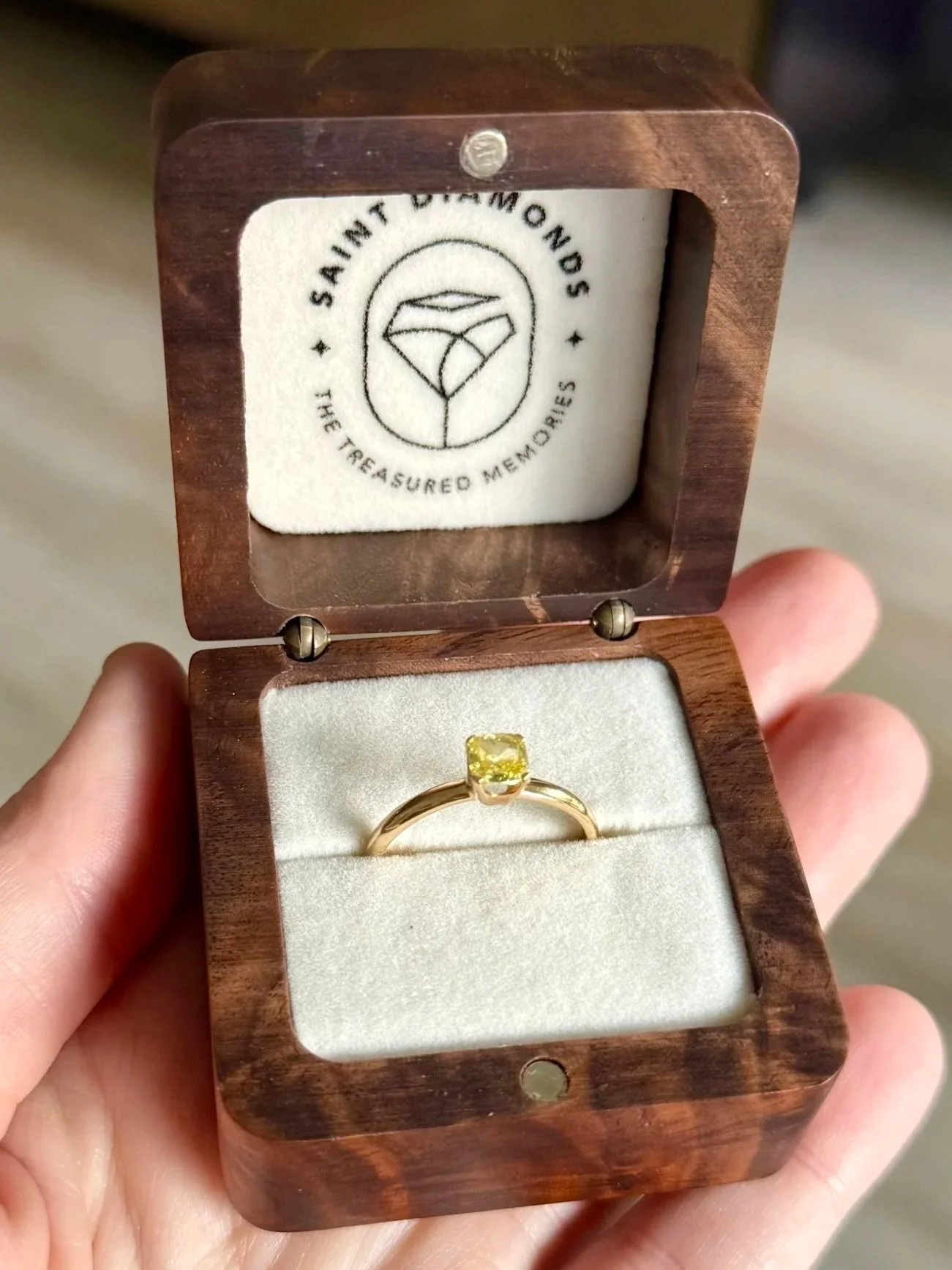
Memorial jewelry — diamond — Companies like Eterneva use a high-pressure, high-temperature process to grow a real diamond from the carbon in your dog's ashes or hair. Colors available include white, yellow, blue, and green. Cost ranges from ~$2,500–$22,000. Note: the diamond contains ~15% of your dog's carbon; the rest is supplemental carbon.
Memorial jewelry — glass — Hand-blown glass pendants, suncatchers, or beads with your dog's ashes infused inside. Often more affordable than diamonds. Companies include Artful Ashes, Soulbursts, and Remember Me Glass.
Memorial jewelry — resin — Ashes pressed into a resin pendant or bracelet. Widely available on Etsy at varying price points.
Tooth mold jewelry — Some jewelers will create a silver or gold cast replica of your dog's tooth — worn on a necklace or bracelet.
Living & Nature Memorials
Memorial tree — Plant a tree in your yard or a meaningful location using your dog's ashes mixed into the soil. Some companies offer biodegradable urns designed specifically for this. A living, growing tribute you can visit forever.
Wildflower garden — Mix ashes into soil and plant a wildflower bed in their favorite spot. Every spring bloom is a remembrance.
Coral reef ball — Your dog's ashes are incorporated into a concrete reef ball that is placed on the ocean floor, becoming part of a living coral ecosystem. Petreefs.com and Eternal Reefs are the primary providers. Note: EPA regulations for sea placement of pet remains differ from humans — confirm permitting with your provider.
Name a star — The International Star Registry and similar services allow you to name a star after your dog and receive a certificate with coordinates. A comforting idea for families who want something to look up at.
Ash Transformations
Vinyl record — Your dog's ashes can be pressed into an actual playable vinyl record. Some companies allow you to also record a voice message or choose a meaningful song.
Hourglass — Ashes transformed into colored sand sealed in a decorative hourglass — a quiet, tactile object you can hold.
Writing & Storytelling
Write a letter to your dog — One of the most healing things many families do. No rules, no grammar, no editing. Just everything you want to say. Keep it in a journal, or seal it away.
Grief journal — Writing consistently about pet loss has documented mental health benefits (Dr. James Pennebaker's research showed measurable improvements in mood and physical health). Prompts are freely available at Best Friends Animal Society and The Ralph Site.
Memory book — A scrapbook or printed photo book organized around your dog's life — where they came from, their personality, their best days, their people.
Commission a poem — Poets on Etsy and Fiverr can write a custom poem based on details you share about your dog. A surprisingly personal and lasting gift.
Share their story with GBF — [ADD SUBMISSION FORM LINK] GBF can feature them on Instagram or a dedicated "In Memory Of" page on the website.)
Home & Garden
Custom urn — Ceramic, wood, or metal urns personalized with your dog's name, photo, or breed. Many veterinary cremation services offer options, or search Etsy for handmade versions.
Engraved garden stone — A simple, lasting outdoor tribute. Can include their name, dates, and a short phrase.
Custom photo blanket or pillow — A functional keepsake with your dog's face. Many families sleep with these or keep them on the couch where their dog used to lie.
Wind chimes with name engraved — A gentle, sensory memorial. Some families find the sound comforting rather than sad.
Acts of Service
Donate to GBF or another organization in their name — Turn grief into action. A donation in your dog's name to the Good Boy Foundation's Cancer Support Fund, or another animal welfare cause they'd have loved.
Sponsor a dog at a shelter in their name — Many shelters allow you to sponsor a specific dog's care until they're adopted.
Foster an animal from the shelter — When you're ready. Not a replacement — a continuation of love.